
Apple's September Launch Lineup What's Actually Worth Your Money This Year

If you're deciding where to actually spend money, the iPhone 18 Pro is the safe, sensible upgrade for most people, the Apple Watch Ultra 4 earns its price for serious athletes, and the iPhone Duo is genuinely exciting but carries enough first-generation risk that most buyers are better off waiting and watching.
The Lineup Itself Was a Genuine Surprise
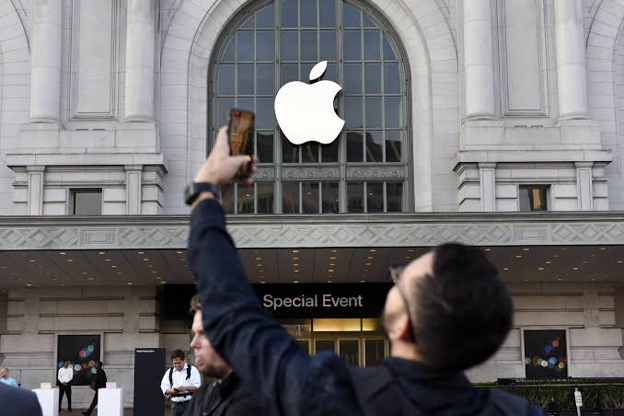
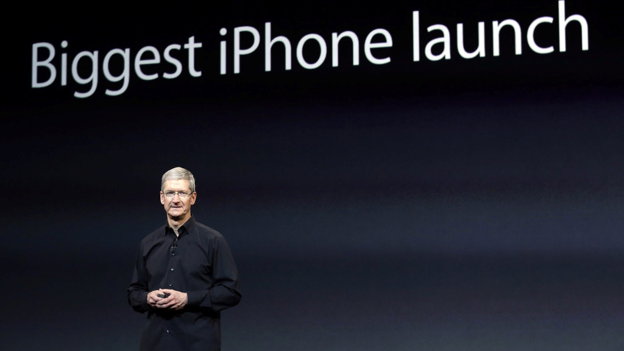
This was the first Apple keynote hosted by John Ternus, who took over as CEO on September 1 after Tim Cook stepped back to become executive chairman, and the event lived up to its "Surprise and Shine" tagline in one specific way: Apple broke from two decades of habit by not releasing a standard iPhone this September. The iPhone 18, the cheaper iPhone 18e, and the iPhone Air 2 are all being pushed to spring 2027 instead, meaning this fall's lineup is entirely made up of premium, higher-priced devices. That's a meaningful shift for anyone used to Apple's usual rhythm. If you're carrying an older, non-Pro iPhone and were hoping for an affordable refresh this month, there simply isn't one. Your realistic options right now are stepping up to Pro-tier pricing or waiting roughly six more months.
iPhone 18 Pro and Pro Max: The Safe, Sensible Upgrade
Starting at $1,199 for the Pro and $1,299 for the Pro Max, this year's Pro lineup looks familiar at a glance but carries genuine, if incremental, improvements under the hood. The new A20 Pro chip powers a variable-aperture main camera, giving photographers real control over depth of field rather than a fixed setting, and the Dynamic Island has shrunk slightly to reclaim a bit more screen real estate. Apple also introduced its second-generation, in-house C2 modem, which the company says is 50% faster than its predecessor and further reduces reliance on Qualcomm. None of this amounts to a dramatic reinvention, and that's fine. If you're coming from an iPhone 15 or older, the combined jump in camera control, chip performance, and connectivity adds up to a worthwhile upgrade. If you already own an iPhone 17 Pro, this is a skippable cycle unless the variable-aperture camera specifically solves a problem you've been running into.
The iPhone Duo: Genuinely Exciting, But Think Twice Before Preordering
The headline moment of the event was Apple's first foldable, which arrives after years of speculation about names like "iPhone Ultra" or "iPhone Fold." Ternus used his keynote to take a direct shot at existing foldables, describing rival designs as feeling like two phones awkwardly stuck together, a jab clearly aimed at years of hinge and crease complaints leveled at Samsung's Galaxy Fold line. The iPhone Duo starts at $1,999 for 256GB and climbs to $3,199 for the 2TB version, making it the single most expensive iPhone Apple has ever sold. In exchange, you get a roughly 5.4-inch outer display and a 7.6-inch inner display sharing the same aspect ratio, Apple Pencil support (a first for any iPhone), ProMotion, an always-on display, peak brightness up to 3,000 nits, and Touch ID built into the power button instead of Face ID.

Here's the honest read: this is a first-generation product from a company that's historically waited to enter a category until it felt it could meaningfully improve on it. That's reassuring in theory, but real-world hinge durability, battery performance under daily folding stress, and software adaptation to a genuinely new form factor are all things independent reviewers haven't had time to properly stress-test yet. Preorders open October 16, with availability starting October 23, over a month after the rest of the lineup ships. Unless you specifically want to be an early adopter of Apple's foldable category and can absorb the cost of unknown first-generation quirks, waiting for a second opinion, or a second generation, is the more prudent move.
Apple Watch Series 12 and Ultra 4: Low-Risk, Predictable Upgrades
Compared to the iPhone drama, the Watch updates are refreshingly uncomplicated. The Apple Watch Series 12 brings improved heart rate sensing accuracy, a genuinely useful but undramatic refinement for anyone tracking fitness or health metrics day to day. The Apple Watch Ultra 4 extends its already-strong endurance credentials with up to 45 hours of extended workout tracking, a real benefit for ultra-runners, long-distance cyclists, or anyone whose activities regularly outlast a standard smartwatch battery. Both hold familiar price points, and neither represents a category-defining leap. That actually makes them safe, low-drama purchases: if you're overdue for a Watch upgrade, there's little reason to hesitate on either model, since you're not betting on unproven new technology the way you would with the Duo.
AirPods 5: Solid, But Not Urgent
AirPods 5 rounded out the announcements, and while Apple didn't headline them the way it did the foldable, they represent the kind of steady, expected refresh that doesn't demand an immediate decision. If your current AirPods are still working well, there's no urgent reason to switch. If you're due for a replacement anyway, buying the newest version makes sense by default.
The Bottom Line on Where to Spend
If you need a new iPhone right now, the iPhone 18 Pro is the pragmatic choice, offering real improvements without first-generation risk. If you're an athlete who lives by your Watch's battery life, the Ultra 4 is worth the money without hesitation. The iPhone Duo is the most interesting product Apple has shipped in years, but "interesting" and "worth buying on day one" aren't always the same thing, and this is a case where letting other buyers absorb the early risk is the financially sensible call.
FAQs
1. Why didn't Apple release a standard iPhone 18 this September?
Apple pushed the standard iPhone 18, iPhone 18e, and iPhone Air 2 to spring 2027, focusing its September 2026 lineup entirely on premium devices instead.
2. How much does the iPhone Duo cost?
It starts at $1,999 for the 256GB model and goes up to $3,199 for the 2TB version, making it the most expensive iPhone Apple has ever released.
3. When can I buy the iPhone Duo?
Preorders open October 16, 2026, with availability starting October 23, 2026, roughly five weeks after the iPhone 18 Pro and Pro Max.
4. Is the iPhone 18 Pro a big upgrade from the iPhone 17 Pro?
It's an incremental one, with a variable-aperture camera, a faster A20 Pro chip, and a new C2 modem, but not dramatic enough to justify upgrading if you already own last year's Pro model.
Latest Posts