
The Afternoon Slump Explained Why You Crash After Lunch and How to Beat It

If this sounds familiar, you're in very large company. The afternoon slump is one of the most common complaints among people who work at desks, and the good news is that it's usually fixable with small changes.
It's Not Just in Your Head
For a long time, people blamed the big lunch. A heavy meal does play a part, but it isn't the whole story. Your body also runs on a natural daily rhythm, and most people experience a dip in alertness somewhere in the early afternoon. Some cultures even built the siesta around it. So if you feel drowsy at that hour, it doesn't mean you're lazy or badly organised. Your biology is simply doing what it was built to do, and the trick is to work with it rather than fight it.
What Your Lunch Has to Do With It
What and how much you eat matters more than most of us realise. A meal heavy in refined carbs, like white rice, naan, a big sandwich or a sugary dessert, can raise your blood sugar quickly. Your body then releases insulin to bring it down, and some people feel sleepy or foggy as the swing settles. A very large portion also asks your digestive system to work harder, which can leave you feeling heavy. None of this means you should fear carbs. It just means balance and portion size are worth paying attention to.
The Sleep Debt Factor
Here's the uncomfortable truth, the afternoon slump often starts the night before. If you slept badly or too little, your body has less energy to draw on, and the dip arrives sooner and hits harder. Late nights, irregular bedtimes and a phone glowing in bed all chip away at your rest. You might push through the morning on adrenaline, caffeine and routine, then crash once your body finally catches up. No lunch hack can fully make up for poor sleep. If you're tired every single afternoon, look at your nights first.

Your Desk Setup Might Be Making It Worse
Think about where you spend your afternoons. A warm, stuffy room, dim lighting and a chair you haven't left in hours are practically an invitation to doze. Sitting still for long stretches slows your circulation and leaves your body feeling sluggish. Staring at a screen without a break tires your eyes, and tired eyes make the whole body feel tired. Even small environmental changes can help, like opening a window, sitting near natural light or lowering the room temperature a little. It sounds almost too simple, but the setting you work in has a real effect on your energy.
Smarter Lunch Choices
You don't have to eat boring food to beat the slump. Aim for a plate that mixes protein, fibre and healthy fats with your carbs. That might look like dal with vegetables and a modest serving of rice, or a salad with paneer, chickpeas or eggs. These combinations digest more slowly and tend to give steadier energy. Try not to skip lunch either, because arriving at mid-afternoon starving usually leads to a sugar-heavy snack and another crash. Eat slowly, stop when you're comfortably full, and leave the second helping for another day.
Move for Five Minutes
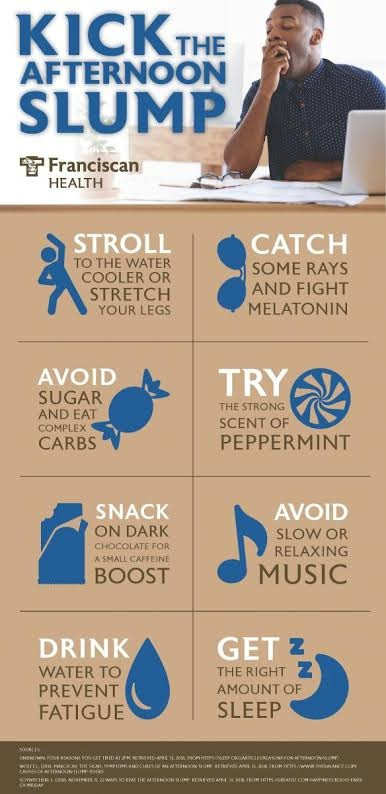
The best antidote to afternoon sleepiness is surprisingly small, which is a short walk. Even five to ten minutes of gentle movement gets your blood flowing and wakes your brain up. A stroll around the office, a few flights of stairs, or a lap around the block after lunch can all help. Stretching at your desk counts too, especially for your neck, shoulders and back. If you can step outside, daylight gives your body clock a helpful nudge. Think of movement as the quickest reset button you already own.
Be Smart About Caffeine and Sugar
A cup of tea or coffee after lunch is fine for most people, but it works best in moderation. Too much, or too late in the day, can steal sleep from your night and set up tomorrow's slump. Sugary snacks and energy drinks give a quick lift followed by a sharper fall, which is the opposite of what you want. If you need something to nibble, try nuts, fruit, roasted chana or yoghurt. And drink enough water, because mild dehydration can make you feel tired and fuzzy without you noticing. A glass of water is often more helpful than a third coffee.
Work With Your Energy, Not Against It
You may not be able to change your schedule completely, but you can plan around the dip. Save demanding, creative or analytical work for the morning when you're sharpest. Use the slower afternoon hours for simpler tasks such as emails, admin, filing or routine calls. If your job allows, shift a meeting or a walk-and-talk into that sleepy window. A brief break to chat with a colleague can break the spell as well. Treating the slump as a predictable part of your day makes it much less frustrating.
When It Might Be Something More
Occasional afternoon drowsiness is normal, but constant, overwhelming tiredness deserves attention. If you're exhausted every day despite good sleep, or you fall asleep unintentionally, feel dizzy, or notice other changes like unusual thirst or weight shifts, speak to a doctor. Issues such as sleep disorders, anaemia, thyroid problems or blood sugar concerns can all cause persistent fatigue. A simple check-up can rule them out or set you on the right track. This article is general information and can't replace personal medical advice.
Final Thoughts
The afternoon slump isn't a character flaw, and you don't need a miracle trick to handle it. Good sleep, balanced lunches, a bit of movement, sensible caffeine and a friendlier workspace will take you most of the way. Start with one or two changes this week and see what shifts. Small habits, repeated daily, often beat dramatic overhauls. Your afternoons can feel a lot lighter than they do right now.
Frequently Asked Questions
1. Why do I feel so sleepy after lunch?
It's usually a mix of your natural body clock dip, the size and type of your meal, and how well you slept. Heavy, carb-rich lunches can make the drowsiness stronger.
2. Does eating less at lunch help with the afternoon slump?
Often, yes. Moderate portions with protein and fibre tend to keep energy steadier than a very large or sugary meal. Skipping lunch entirely can backfire, though.
3. Is it okay to nap in the afternoon?
A short nap of about 10 to 20 minutes can refresh many people. Longer naps may leave you groggy and make it harder to sleep at night.
4. What are the best snacks for an afternoon energy boost?
Nuts, fruit, yoghurt, roasted chana or a small portion of whole-grain crackers with protein are good choices. They give more lasting energy than sugary snacks.
5. When should I see a doctor about constant tiredness?
If you feel exhausted every day despite enough sleep, or if it comes with symptoms like dizziness, unusual thirst or sudden weight changes, get a check-up to rule out underlying causes.
Latest Posts