
Autonomous AI Personal Finance Coaches vs. Manual Budgeting Apps
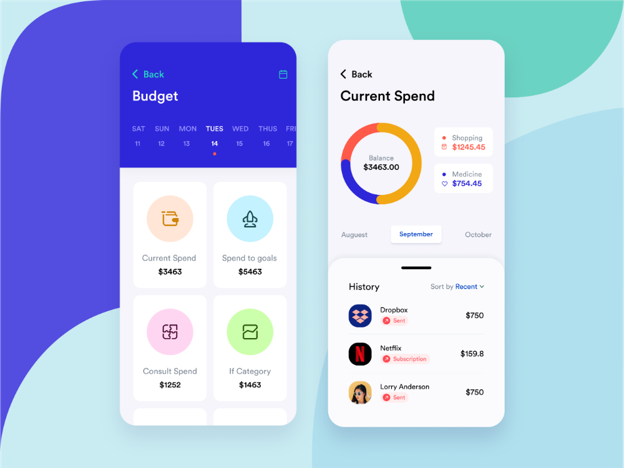
AI Personal Finance Tools have built upon this very crisis: the gap between the discipline regular budgeting requires and the discipline that people commonly have. In the present budgeting market, AI tools are part of an estimated 68% of finance apps.
However, being AI-powered could mean differently in the app interfaces, from simply using AI to auto-categorize expense categories to forecasting cash flow weeks and reminders to prevent autospend, there’s quite a lot that they can do! Manual budgeting apps in the meanwhile are here too providing everyone with the control and precision that many people seek still. And while that comparison might seem enough to make your choice, you can check what suits you more on three things: how well expenses get tracked, how safely your data is handled, and how accurate the resulting financial decisions actually are.
Table of Contents
- Quick Comparison
- What "Autonomous AI Coach" Actually Means
- Automated Expense Tracking
- Data Security: The Question That Should Come First
- Decision Accuracy: Where AI Helps and Where It Doesn't
- Pros and Cons
- Who Should Choose Which
- Conclusion
Quick Comparison
|
Feature |
Autonomous AI Finance Coach |
Manual Budgeting App |
|
Transaction categorization |
Automatic, machine-learned |
Manual, or rule-based automation |
|
Ongoing effort required |
Low — mostly passive |
High — requires regular upkeep |
|
Personalization |
Adapts to your patterns over time |
Reflects only what you input |
|
Proactive alerts |
Yes — overspending, anomalies, cash flow forecasts |
Limited, usually threshold-based only |
|
Precision/control |
Lower — AI makes categorization judgment calls |
Higher — you decide every categorization |
|
Learning curve |
Low |
Moderate to high |
|
Data access model |
Often broader (read/write, aggregated insights) |
Typically read-only bank connections |
|
Best for |
Consistency, people who abandon manual tracking |
Precise control, financially engaged users |
What "Autonomous AI Coach" Actually Means
It’s common to come across an app description claiming "AI budgeting app" or “AI Integrated” but their actual integration is something worth noting for. When evaluating an AI-powered app, you might notice that there are three larger categories:
1. Chatbot-style coaches, in the mold of apps like Cleo, lean heavily on conversational interaction where you can ask natural-language questions like "how much did I spend on dining out last quarter?" and get a direct answer.
2. Predictive dashboard tools, like Copilot Money or Monarch Money, lean more on pattern detection and categorization, presenting trends visually rather than conversationally.
3. Autonomous investment agents monitor markets continuously and can even execute trades or portfolio rebalancing within preset risk parameters, without requiring a decision from you at the moment.
Automated Expense Tracking
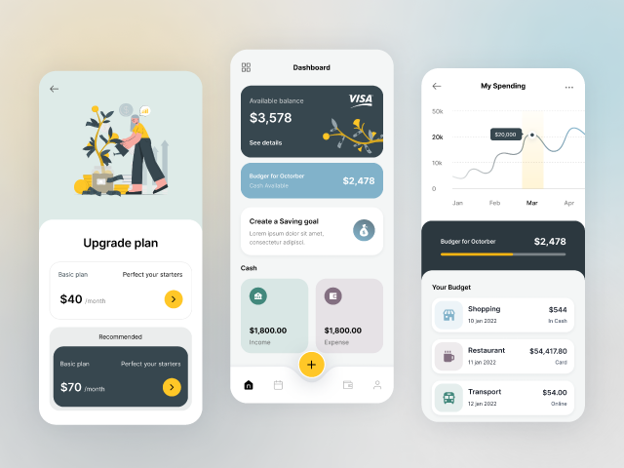
This is the area where the gap between AI tools and manual apps is most obvious in daily use. Early budgeting apps required rigid rule-based categorization, you would manually instruct it to categorize specific merchants or transaction notes into a category, and hope the bank's transaction descriptions stayed consistent enough for the rule to keep working. Automated AI apps utilize Machine-learning-based categorization, which accurately tags merchants even when the underlying bank statement text is close to unreadable.
And this doesn’t simply add convenience but also adds onto the notion of AI being "smarter" about money and allows you to stay stress-free while the app simply keeps working during the weeks a person would otherwise abandon a manual spreadsheet or notebook of expenses. Yet, it’s also important to note that AI categorization isn’t flawless and could require manual supervision or correction, at least until the AI tool understands your expense habits as well as categorization preferences while adapting to your needs in the first few weeks.
Data Security: The Question That Should Come First
Honestly, the most important detail that often doesn’t receive the recognition it truly requires since these tools handle your bank accounts, income, spending patterns, and often tax information. The baseline security measure could include ensuring the app does not store your banking credentials directly while also checking for whether the tool uses read-only bank connections or requests write access. Read-only connections, where the app can see your transactions but can't move money or take action on your accounts, carry meaningfully lower risk than tools that request broader permissions — a distinction that matters more with autonomous AI agents specifically, since some are explicitly designed to execute trades or transactions on your behalf rather than simply observe and report.
Manual budgeting apps generally have a narrower risk margin as they only ever read your transaction history and never act on your accounts, lessening the risk of harm or data loss even in a worst-case breach scenario. And it doesn’t necessarily require you to avoid AI tools, but rather check what level of access a given AI coach requires and the security that it offers instead of simply choosing it for the "bank-level security" claims that it boasts about.
Decision Accuracy: Where AI Helps and Where It Doesn't
AI tools are generally strongest at pattern recognition across long stretches of data — spotting that your utility bill just jumped 40% above its historical average, or noticing a subscription charge that's crept up over several months without you registering it. These apps have also improved on Real-time fraud detection while being able to analyze transaction velocity, location, and device data simultaneously, catching suspicious activity in milliseconds with fewer false alarms than older rule-based fraud systems.
Yet there might remain some instances where AI accuracy and dependency could be considered risky, like when making financial decisions and deciding whether to pay down debt aggressively versus invest, how to structure a major purchase, or retirement drawdown strategy. Such decisions might be more complicated and hold personal influencers or considerations (family circumstance, risk tolerance, emergency fund necessity) which an app may not truly or subjectively account for. Manual budgeting takes the lead with its own strength in accuracy as you're the one categorizing and reviewing every transaction while eliminating the risk of an algorithm's judgment call misclassifying something that could alter your analysis of your actual budget and investment options. And like other categories, this requires consistent and precise management and upkeep - something where AI apps continue to take the lead.
Who Should Choose Which
If you’ve made multiple attempts to be regular with your budgeting habits but have struggled with being consistent, an AI-powered tool might simply suit your needs, for it pays attention to your transaction even when you don't realize it. If you’re someone who focuses on maintaining a detailed approach and do not feel exhausted by the efforts of financing, or perhaps are simply hesitant of connecting your account access to a third-party AI tool, a manual budgeting app would simply become a perfect choice for you!
Conclusion
In the end, the honest takeaway isn’t about which approach is objectively better on paper, but the “better” tool that actually allows integration into your daily life. AI Finance Coaches sacrifice bits of precision and take up broader data access to ensure you’re accounting consistently, something manual budgeting often misses out on. Manual apps on the other hand give you a narrower risk profile and greater control over your budgeting habits but demand you to be disciplined and committed for the longer term. And irrespective of whichever becomes your preferred choice, it would be wise to assess the specific data access and security practices of the apps you utilize, and then begin your budgeting and accounting journeys.
Latest Posts