
Bond Yields Are Spiking What It Actually Means for Your Wallet
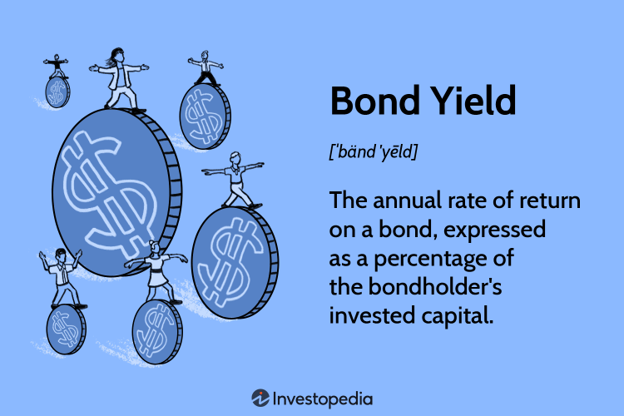
The recent rise in global bond yields has attracted attention because U.S. 10-year Treasury yields moved above 5% in September, while the average 10-year yield across G7 economies reached its highest level since 2008, according to Reuters. Inflation concerns, higher oil prices, expectations around interest rates and worries about government borrowing have all contributed to the pressure.
What Are Bond Yields, Really?
A bond is essentially a loan. Governments and companies borrow money by issuing bonds, while investors provide that money in return for interest and the eventual repayment of the principal. The yield represents the return investors expect from holding that bond at its current market price. The confusing part is that bond prices and yields generally move in opposite directions. When the price of an existing bond falls, its yield rises, and when its price rises, its yield falls. This is why a headline saying “bond yields are rising” doesn't necessarily mean every bond suddenly started paying a higher coupon.
Why Rising Bond Yields Matter Beyond Wall Street
The reason yields matter is that government bonds often act as a reference point for the wider cost of money. When investors demand higher yields on government debt, other borrowers may have to offer higher rates to attract capital as well. Banks, companies and consumers don't all borrow at exactly the same rate as governments, but the broader interest-rate environment influences the pricing of loans and investments.

For borrowers, that can be uncomfortable. Higher market interest rates can eventually translate into more expensive mortgages, personal loans, business borrowing and other forms of credit. The impact depends on the type of loan and how lenders set their rates, so a rise in bond yields doesn't automatically mean your EMI changes tomorrow morning. But if borrowing costs remain elevated, households considering a large loan have less room for error in their budgets.
What Higher Yields Mean for Your Loans
Consider someone planning to take a large home loan. A difference of even a fraction of a percentage point in the interest rate can become meaningful when the loan runs for 15 or 20 years. The important lesson isn't to panic every time yields move higher. It is to understand the rate you're actually being offered, whether it is fixed or floating, and how comfortably your income could handle a higher payment if rates don't fall as quickly as expected.
Why Savers May Actually Benefit
There is, however, another side to rising yields. Savers and fixed-income investors can eventually benefit because newly issued debt may offer better returns. When interest rates are higher, banks may offer more attractive deposit rates, while new bonds can provide higher yields than bonds issued when rates were lower. The timing and extent of this benefit varies by product and institution, but the basic trade-off is straightforward: borrowers generally dislike higher rates, while savers can benefit from earning more on money they keep in interest-bearing assets.
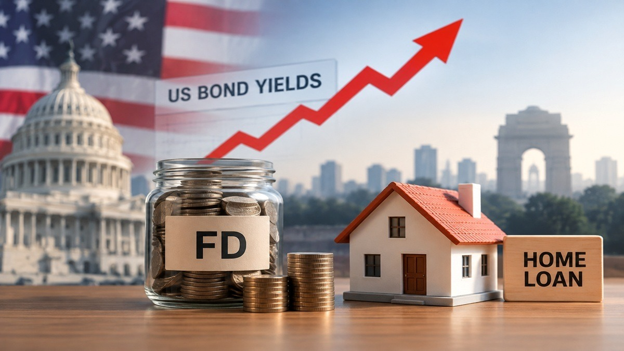
Why Existing Bonds Can Lose Value
Existing bondholders face a different issue. Suppose you own a bond paying 6% and new bonds begin offering 7%. Your old bond suddenly looks less attractive. If you wanted to sell it in the market, you might have to accept a lower price to compensate the buyer for receiving a lower interest payment. That is why the market value of existing bonds can fall when yields rise. This doesn't automatically mean the investor has permanently lost money. If a bond is held until maturity and the issuer fulfils its obligations, the investor's experience can be very different from someone who sells the bond before maturity. The distinction becomes particularly important with bond funds, because fund values are continuously affected by changes in the market value of the bonds they hold. Investors therefore need to understand duration and interest-rate sensitivity rather than looking at the advertised yield alone.
How Rising Bond Yields Can Affect Stocks
Stocks can also feel the effect of higher bond yields, although the relationship is far from mechanical. When relatively low-risk bonds offer higher returns, investors may demand a better potential return from riskier assets such as equities. Higher interest rates can also reduce the present value of future corporate earnings, which can put pressure on stock valuations. Companies that depend heavily on future growth can be particularly sensitive to this dynamic.
But it would be a mistake to assume that rising yields automatically mean falling stock markets. Equity prices are influenced by corporate earnings, economic growth, investor expectations, liquidity and countless other factors. Recent market action is a useful reminder of that complexity: despite the sharp rise in Treasury yields earlier in September, U.S. equities remained relatively resilient, supported by strong earnings and enthusiasm around artificial intelligence. ("reuters.com" (https://www.reuters.com/business/finance/stocks-wobble-no-sign-panic-yields-surge-2026-09-15/?utm_source=chatgpt.com)
What Rising Bond Yields Mean for Indian Investors
For Indian investors, the story is particularly relevant because global financial markets don't operate in isolation. U.S. Treasury yields can influence international capital flows, currency movements and financial conditions in emerging markets. India's own bond market has also experienced upward pressure. Reuters reported that India's 10-year benchmark government bond yield reached 7.0686% on September 18 after rising for five consecutive weeks, with liquidity conditions and expectations around monetary policy contributing to the move. ("reuters.com" (https://www.reuters.com/world/india/indian-rupee-eyes-portfolio-flows-oil-prices-bonds-face-liquidity-drain-2026-09-21/?utm_source=chatgpt.com)
Should You Change Your Investment Strategy?
That doesn't mean an Indian investor should immediately sell stocks or move everything into fixed deposits. Investment decisions should start with the purpose of the money. Funds needed within the next couple of years generally require a different approach from money being invested for retirement decades away. Someone saving for a house deposit, for example, should think much more carefully about capital preservation than someone investing for a long-term retirement goal.
The same principle applies to debt. If you're carrying expensive variable-rate debt, understanding the interest-rate environment can be more valuable than trying to predict where the stock market will go next. Paying down high-cost debt can effectively provide a predictable financial benefit because every rupee of interest you no longer have to pay is money that stays in your pocket.
Why Are Bond Yields Rising in the First Place?
It is also worth remembering why yields are rising. Higher yields aren't necessarily a sign that something is “broken.” Markets can demand higher returns because investors expect higher inflation, stronger economic growth, greater government borrowing or more uncertainty. Recent global yield increases have been linked to several of these factors, including elevated oil prices and expectations of tighter monetary policy. ("reuters.com" (https://www.reuters.com/world/asia-pacific/bond-selloff-drives-us-benchmark-beyond-5-stocks-rattled-2026-09-15/?utm_source=chatgpt.com)
The U.S. Federal Reserve also raised its benchmark federal funds target range by 25 basis points to 3.75%-4% on September 16, citing inflation that remained elevated. ("federalreserve.gov" (https://www.federalreserve.gov/newsevents/pressreleases/monetary20260916a.htm?utm_source=chatgpt.com)
What Should You Do With Your Money?
For households, the smartest response is usually less dramatic than the headlines suggest. Review your loans, check how much interest your savings are actually earning, understand the maturity and duration of your fixed-income investments, and make sure your portfolio matches the time horizon of your goals. Don't buy a bond simply because its yield looks attractive, and don't sell a long-term investment solely because a financial headline sounds alarming.
The Bottom Line
Bond yields may appear distant from everyday life, but they are effectively part of the economy's pricing system for money. When that price changes, borrowing, saving and investing all adjust around it. You don't need to predict the next move in yields to protect your finances. You simply need to know where higher rates would help you, where they could hurt you, and whether your financial plan can handle both.
Latest Posts