
Claude, Gemini, GPT The AI Agent Price War Explained
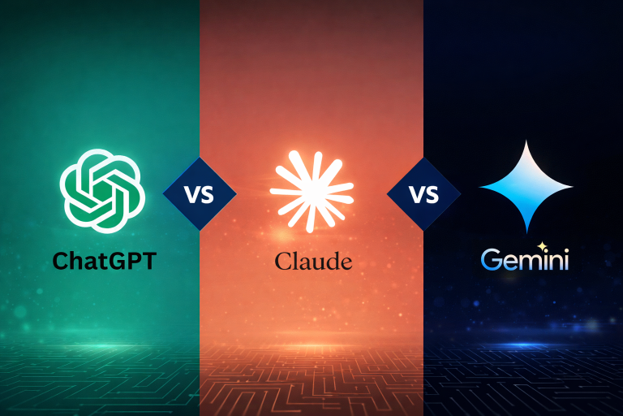
Well today, that era is officially over and the gradual development has led it somewhere else, an actual price war amongst the three leaders of AI Labs competing around the world by cutting rates, releasing cheaper tiers of their models and even going as far as repositioning entire product lines within weeks of each other, simple to provide easy access to their services and grab the largest possible market share.
Table of Contents
1. How We Got Here
2. Current Pricing, Side by Side
3. What Each Company Is Actually Competing On
4. The New Flagships: A September Snapshot
5. Why Agent Workloads Are Different from Chat
6. Real-World Cost Example
7. Pros and Cons of Each Provider's Approach
8. What This Means for Developers Choosing a Provider
9. Conclusion
How We Got Here
AI Labs pricing crashes haven't happened overnight, but are a result of continuous movements across 2025 and 2026. Anthropic cut Claude pricing sharply at multiple points through the cycle, while OpenAI followed with aggressive tiered pricing of its own, and Google leaned into making its lower-tier Gemini models nearly free to use. Additionally, the invasion of Chinese labs like DeepSeek released frontier-competitive models at a fraction of the training and inference cost in the AI Lab Marketplaces, in turn forcing every major US lab to either match the pressure and prices or risk losing developers loyalty to a genuinely cheaper alternative. Over the two years, the conversation has changed from “who has the smartest model” to “who has the smartest model per dollar”, a distinction of significant value for developers who run AI Agents continuously in their daily lives.
Current Pricing, Side by Side
While the constant volatility in prices across all the three labs makes it difficult to establish and draw inferences for permanent use, a current snapshot dated September 2026 presents a current insight of associated cost, per million tokens.
|
Tier |
Anthropic (Claude) |
OpenAI (GPT) |
Google (Gemini) |
|
Budget |
Haiku 4.5 — $1 / $5 |
GPT-5.6 Luna — $0.20 / $1.20 |
Gemini 3.x Flash (intro) — ~$0.75 / $3.75 |
|
Mid-tier |
Sonnet 5 — ~$2/ $10 |
GPT-5.6 Terra — $2 / $12 |
Gemini 3.1 Pro — ~$2 / $12 |
|
Flagship |
Opus 5 — $5 / $25 |
GPT-5.6 Sol — $5 / $30 |
Gemini 3.1 Pro (long context) — higher tier |
|
Top-of-line |
Fable 5.1 — $10 / $50 |
GPT-6 Astra — $10 / $50 |
Not yet at this tier |
What Each Company Is Actually Competing On
Price is often an important driving factor behind product choices amongst the consumers, but the three labs aren't really competing for the price fight. According to analysis from VentureBeat, OpenAI has leaned into direct, aggressive per-token rate cuts with cuts as significant as 80% in its budget-tier Luna model. Google has instead chosen a more calculated approach by pairing modest price reductions with efficiency gains, limiting the tokens required per task to enhance efficacy. Anthropic, meanwhile, has decided to maintain its prices while promoting its models to deliver greater capability per dollar while positioning Claude Opus 5 as a matching rival flagship performance at a lower price than its predecessor. And this distinction makes it crucial to also define what the “cheaper provider” means for you. Developers now evaluate these AI Labs on the basis of the sticker price per token, tokens required to complete a given task, or overall cost per successfully completed task, a more appropriate estimate of the Agents Cost instead of purely focusing on raw per-token rates alone.
The New Flagships: A September Snapshot
September brought new waves in the market as OpenAI released GPT-6 Astra on September 3, 2026, positioning the new flagship at $10 input / $50 output per million tokens, a direct match with Anthropic Fable 5.1 on pure price. Open AI’s CEO Sam Altman, took a direct stance while responding to comparisons of the GPT-5.6 Sol undercutting Anthropic's pricing, while claiming OpenAI would be "happy to deliver at one-quarter of the price" if that's what the competition demands.
Why Agent Workloads Are Different from Chat
The “agent” framing in this price war is of great importance, especially since agentic workloads consume tokens very differently than a simple chatbot conversation. An agent that performs multi-step tasks, calls tools repeatedly, and runs for extended sessions can burn through hundreds of thousands to millions of cumulative tokens on a single complex task, a mechanism that can result in severe compounding of the small per-token price difference than a casual chat use. This very usage explains the three labs' choice of pricing mechanisms focusing on agent-style usage to ensure the agents remain affordable even for users who use long-running autonomous agents as compared to the cost of single-token billing mechanisms.
1. Prompt caching (which can cut repeated-context costs by up to 90%) - Open AI
2. Batch processing for non-time-sensitive work (typically 50% off standard rates) - Gemini
3. Session-based pricing for managed agent runtimes billed by the hour rather than purely per token. - Anthropic Claude

Real-World Cost Example
To make the numbers simpler to understand, you can expect a monthly workload of 50 million input tokens and 10 million output tokens to cost roughly $110 on OpenAI's budget-tier Luna model, compared to roughly $275 on the mid-tier Terra model, and considerably more on any flagship-tier model across providers. A strong difference in the model's capacity that aligns with jumps of moving from a budget tier model to a larger model and the final flagship version. This has enabled AI Labs to implement “multi-model strategies, allowing developers to manage what tasks consume tokens across their models and how much they pay based on their needs of the service.
Pros and Cons of Each Provider's Approach
|
Strengths |
Trade-offs |
|
|
Anthropic (Claude) |
Strong reputation for coding and agentic reliability; consistent pricing rather than constant churn; competitive flagship pricing relative to rivals |
Historically less aggressive on budget-tier pricing than OpenAI's cheapest options |
|
OpenAI (GPT) |
Most aggressive direct price cuts; widest spread from ultra-budget to flagship; frequent new tier releases |
Rapid model/tier turnover can make cost planning harder; flagship pricing still premium |
|
Google (Gemini) |
Efficiency-focused approach reduces total tokens needed, not just price; deep integration across Google's ecosystem |
Introductory pricing on some tiers is scheduled to increase; flagship-tier options more limited than rivals |
What This Means for Developers Choosing a Provider
For developers who use these platforms to build on a daily basis, the practical takeaway isn't to "pick the cheapest provider", but one that enables you to plan your budget and tasks smartly through model routing. Sending simple classification or extraction tasks to a budget-tier model while reserving flagship-tier models for genuinely complex reasoning or agentic planning can provide effective cost-cuts as compared to running everything through a single top-tier model by default. Amongst the current generation of developers, Prompt caching and batch processing, where applicable, along with multi-model strategies while deliberately mixing providers across tasks has become increasingly common specifically as a navigation across a single provider's pricing or capability shifts.
Conclusion
The price volatility and competition across Claude, Gemini, OpenAI and the Chinese labs doesn't simply show a current price war or competition in companies, but a structural shift in how AI labs are getting priced generally. Token costs that once made frontier AI a luxury reserved for well-funded teams have now faced drastic cuts to allow access for far more builders than eighteen months ago. Now whether these strategies begin to draw rewards for the AI labs and actually result in profit, is a question that hangs over the rest of 2026. But for developers today, the price difference of building an AI Agent today is sharply more significant than at the start of the price war, a gap that barely shows any signs of covering back up.
Latest Posts