
Cloud 3.0 and the emergence of sovereign architectures for managing sensitive proprietary data
Companies no longer simply migrate their business into the cloud; they are taking back strategic control over their operations by establishing a corporate presence within reliable sovereign architectures.
The Sovereignty Paradox
The public cloud has, for over a decade and a half, provided the potential for freedom from infrastructure. However, companies today are now faced with a multitude of data sovereignty laws around the world (such as the EU General Data Protection Regulation (GDPR), India Data Protection Bill (DPDP), China Cyber Security Law (CSL) etc), each resulting in their own jurisdictional silos (50+) across the globe. As a result, we now have a situation of "legal whiplash" in that the CLOUD Act and GDPR Article 48 are in conflict; US authorities are requiring access to customer data, while European authorities are prohibiting the transfer of the same.
As a result, there is a need for companies to repatriate high-value workloads through "geopatriation." This strategy is not about abandoning the public cloud, but rather building and operating private clouds that are federated to the public, while remaining governed by the jurisdiction/nation of their primary place of business. One example of this would be the company Airbus which is repatriating approximately 70% of its workloads from AWS to Gaia-X-compliant infrastructure.
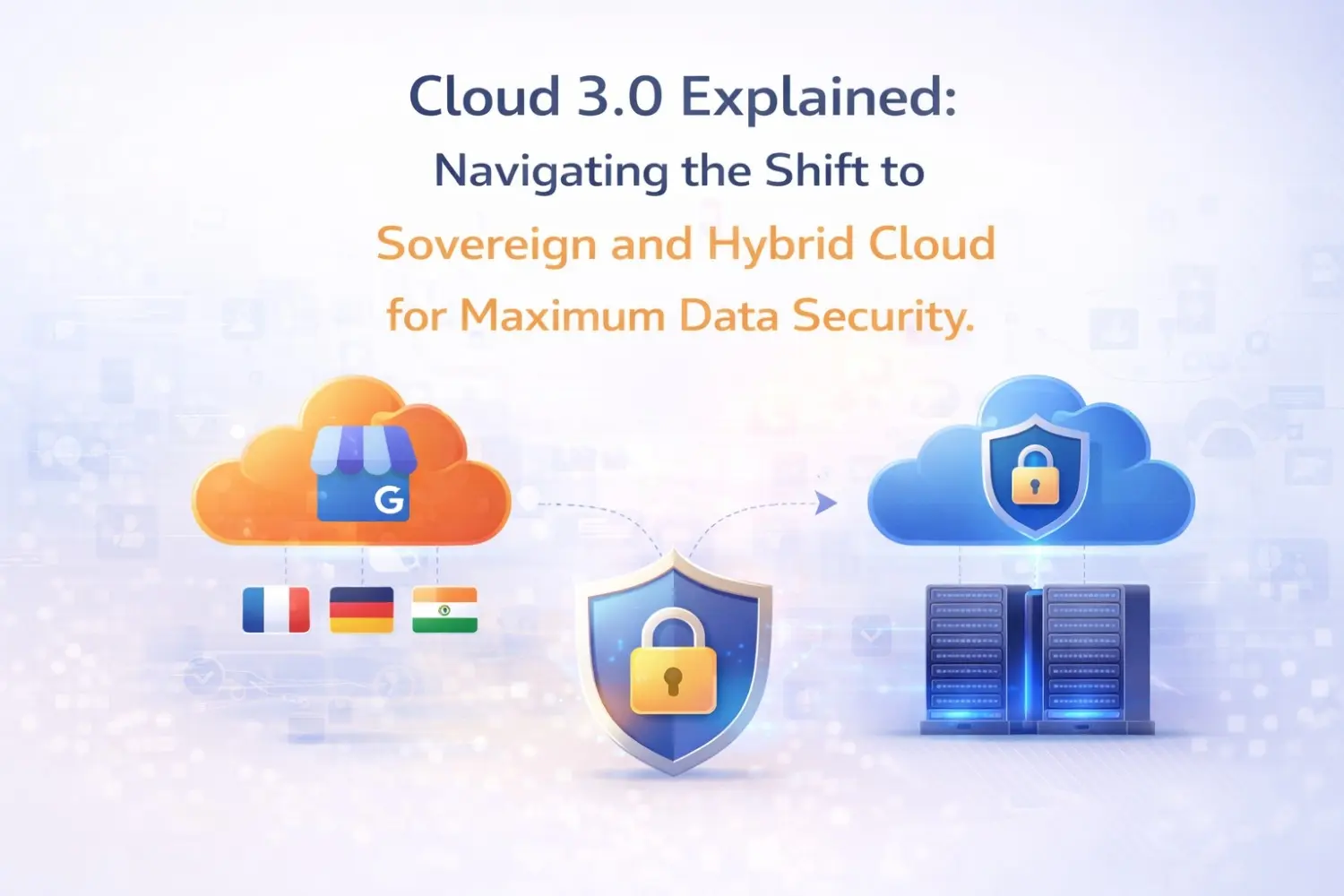
Cloud 3.0 Architecture Principles
Cloud 3.0 has three interconnected components:
1) Intent-based orchestration: Developers can declare that they want an environment with “ultra-low latency” ability to run 5K agent swarms in real-time across different areas across the world.
2) Zero-Trust Data Planes: The use of Homomorphic encryption allows computations to be performed on encrypted datasets for customers. As such, cloud providers (ref. Intel SGX or AMD SEV) will never be exposed to any customer data.
3) Edge Sovereignty Continuum: As processing moves closer to the edge (i.e. 5G base stations, and enterprise premises), Latency will be reduced to Sub-Millisecond levels while keeping jurisdictional controls intact.
The Proprietary Data Imperative
The necessity for Cloud 3.0 arises from sensitive confidential information (trade secrets, PII, ML training datasets). Enterprises have discovered that public clouds charge AI tax—data egress fees to transfer data for model training amount to an average cost of Eur 18 million per year for Fortune 500 companies.
Private AI factories are a solution; they are on-premises or sovereign cloud clusters that are used to fine-tune Llama 3.1 derivatives on internally developed, proprietary datasets. ASML has built a sovereign AI cluster in the Netherlands that cost €200 million, and all of the data being processed is done so within the borders of the EU.
Sovereign Cloud Market Dynamics
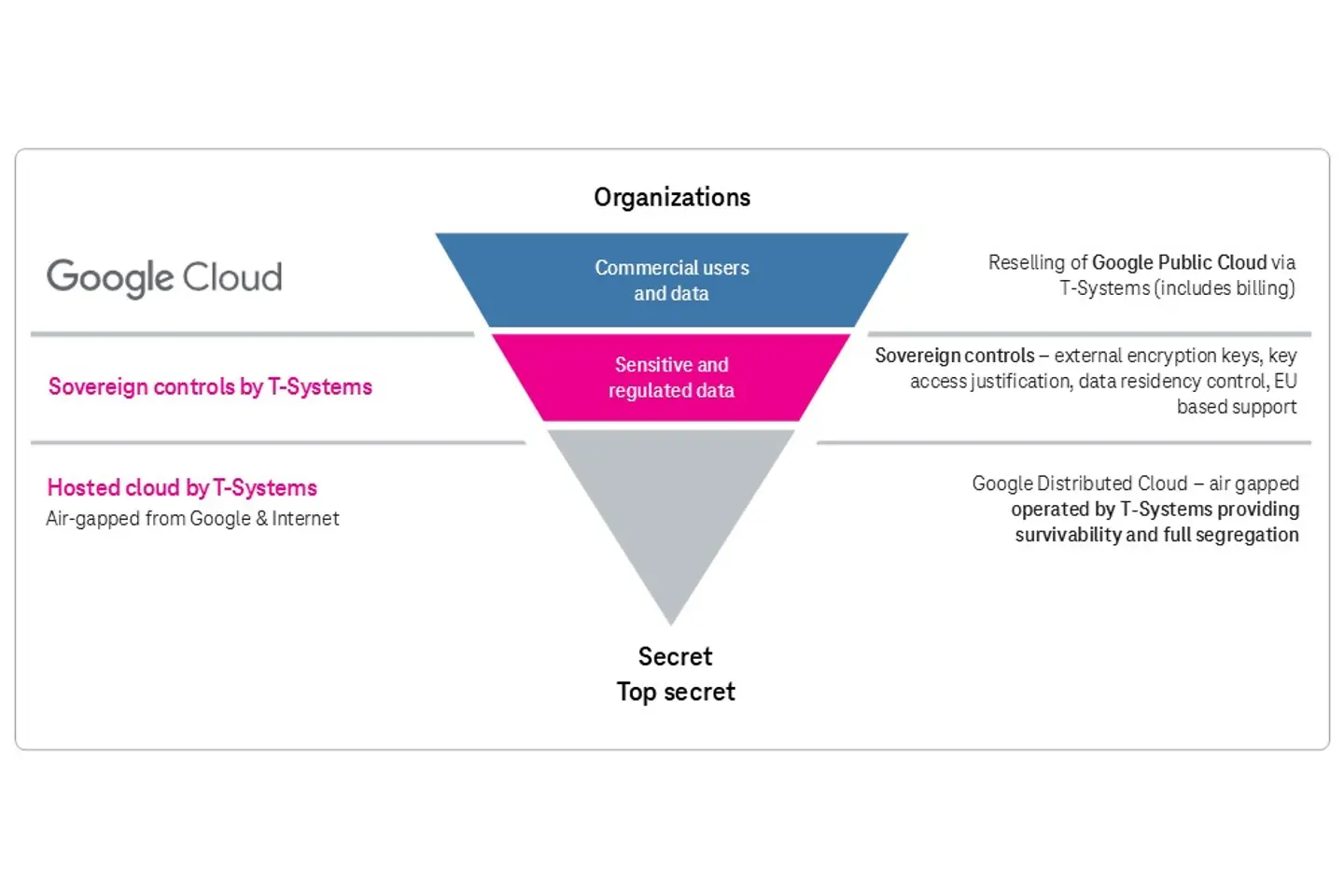
The Sovereign Cloud Market is projected to reach $97 billion by 2026 with a compound annual growth rate of 42% through 2030. Germany is leading the charge with 28% of the market share (Gaia-X), but India (Ministry of Electronics and Information Technology Cloud) and the United Arab Emirates (G42 Sovereign Stack) are close behind.
As this market expands, three distinct tiers of providers will emerge:
1. National Champions:
- Deutsche Telekom T-Systems
- Reliance Jio Cloud
2. Hyperscaler Sovereigns:
- Azure Germany (no flow of US data)
- Google Cloud India
3. Specialized Enclaves:
- Palantir AIP (US classified)
- Snowflake Sovereign (financial services).
Technical Implementation Patterns
AI training via federated learning does not require data to leave the borders from each participant – this means that BMW is able to produce ML across five EU countries using the same data set to train AI models without exposing any of the original training data.
Multi-cloud bursting consists of workloads primarily being run in the sovereign cloud and bursting out to hyperprocessing providers when needed. Siemens is saving £62k ($77.48) and improving their DSGVO compliance by doing this.
Hardware sovereignty consists of replacing x86 CPUs with ARM Neoverse CPUs built in-country. The Indian government has mandated that 60% of all silicon must be built locally for the Indian government’s work.
Enterprise Use Cases Driving Adoption
Pharmaceuticals: GSK has transferred its clinical trial data to a sovereign cloud in the United Kingdom to avoid the risk of a €15 million fine under the General Data Protection Regulation (GDPR). The data will be kept in a jurisdiction for seven years; no data will leave the jurisdiction during this period.
Automotive: Volkswagen developed its training data within the Gaia-X network and has never sent any training data to an American based provider.
Finance: Deutsche Bank is processing its derivatives trading data via T-Systems' sovereign cloud, thereby reducing exposure to CLOUD Act by 94%.
Cost Structure Shift
Cloud 3.0 is changing the way that businesses make money.
Egress savings from data transfer fees: Fortune 100 will spend $2.3B in 2025 on data transfer fees to transfer data to/from cloud and it can be reduced to $800M with sovereign architectures.
AI training - private clusters are 60% cheaper than hyperscaler GPU rentals for workloads longer than six months.
Compliance - €450M average GDPR fine avoided through residency guarantees.
Regulatory Tailwinds
- EU Data Act (2026): Requires the ability to transfer data from large scale data processors to another organization. Also, it requires that there be expedited movement of data to countries with favorable governance.
- India DPDP Act: Sensitive personal data needs to be processed inside India only.
- UAE PDPL: Cloud computing is required for all government-affiliated entities.
- US Executive Order: CISA approved sovereign clouds can be utilized for classified work requirements.
Risk Mitigation Framework
Locking into a Vendor: Should not be an issue, CNCF standards provide support to eliminate proprietary APIs
Data Weight: Federated Sharding allows for data sets related by jurisdiction to remain in proximity across sovereign boundaries
Talent: Development of sovereign sponsors (Germany & India) will have their DevOps Contractors certified by 2026.
Business Model Innovation
Providers charge more for jurisdictional guarantees than for compute. Examples include Databricks and Palantir's hosting of fully managed ML on a customer's infrastructure. Nokia and Ericsson are creating "edge sovereigns" to provide telcos with a bundle of a 5G core and a sovereign cloud.
Latest Posts