
Continuous Biometric Ring Trackers vs. Display-First Smartwatches
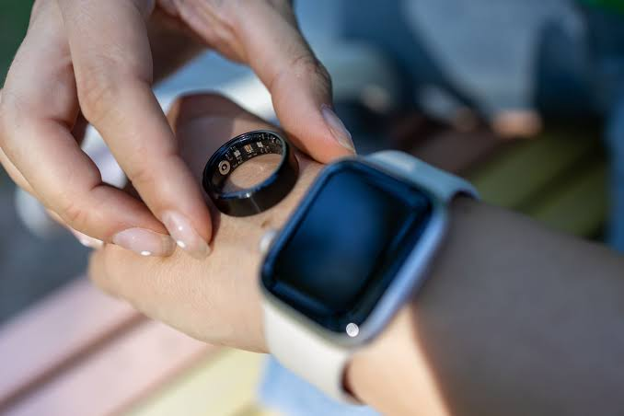
Now this brings us to an important comparison of three parameters: which device tracks sleep more accurately, which one is quietly draining your attention through notifications, and which one gives you recovery numbers you can actually trust.
Table of Contents
- Quick Verdict
- Sleep Quality Precision
- Notification Fatigue
- Recovery Metric Accuracy
- Head-to-Head Comparison
- True Cost of Ownership
- Who Each One Is Actually For
- Conclusion
Quick Verdict
If you're looking for a clear answer, there's no objective answer but the ideal one for you could be based on your preferences. Where Rings win on sleep staging accuracy, comfort-driven consistency, and lower notification-related distraction, watches take the edge over real-time workout metrics, greater GPS accuracy and navigation along with the merits of a larger screen. And honestly neither truly excel at estimating recovery with accuracy, both estimate internal state from external signals, and are prone to be influenced by the same factors (caffeine, alcohol, stress that isn't physical or physically noticeable)
Sleep Quality Precision
An important distinction between the two devices here becomes bodily, not mechanical. The fingers constantly receive more stable, consistent blood flow as compared to the wrist and also are unlikely to be moved as frequently in your sleep. This provides ring-based optical sensors an edge with better passive, overnight monitoring, less motion disturbances, cleaner signals from the body and greater compliance for rings that are lighter (4-8 gram) instead of a watch (30-45 gram)that might be tiresome or annoying to wear overnight.
A 2024 study in the journal Sensors also compared the Oura Ring against wrist-worn devices with polysomnography (the clinical gold standard for sleep staging) as the reference point, and found that the ring achieved roughly 79% four-stage sleep classification accuracy, outperforming the wrist-worn devices tested in the same comparison. And while this means both device types can detect sleep stages, restlessness, and overnight heart rate reasonably well, the difference lies in greater precision, a matter of margins that can influence your understanding of your body if you depend on regular metrics. More significantly for the fourth stage sleep classification while in basic sleep, duration and disruption tracking, the two categories are closer than the headline numbers suggest.
Notification Fatigue
A category that's largely specific to display-first devices, Notification Fatigue focuses on the impact these devices have on your attention. Smartwatches are commonly believed to be more distracting than phones, mainly as they don't require an unlocking step and often relay notifications constantly grabbing your attention repeatedly. And that constant low-grade interruption has been linked to what researchers describe as notification fatigue — a state where the volume of alerts overwhelms rather than informs.
Rings are mainly designed as passive collection devices with no display and no notification channel at all, requiring no attention of yours unlike a smartwatch. And while it may not seem significant enough, it's a trade-off between the convenience of glancing at a text or declining a call from your wrist to maintaining limited screen-driven distraction, a structural advantage that no software update can replicate on a watch.
There's another factor worth considering - stress and heart-rate alerts. Wearables infer "stress" primarily from heart rate and heart rate variability, and struggle to distinguish between genuine anxiety and physiological arousal from caffeine, exercise, or an intense movie scene. A watch provides you with constant measurements and alerts with research suggesting elevated stress alerts have been shown to actually increase anxiety in people already prone to it while also leading to a desire to keep checking the device to know how they're doing internally. A ring generates the same underlying readings but, lacking a screen or push notifications, doesn't deliver them as an interruption in the moment allowing you to check them later through the health app, on your terms.
Recovery Metric Accuracy
A Recovery Metrics is often not one that is measured directly, but rather a computed score and both rings and watches build it from a blend of HRV, resting heart rate, sleep quality, and sometimes body temperature or respiratory rate.
Rings tend to have an edge on the HRV component specifically, mainly due to the finger's more stable blood flow and the ring's higher-compliance overnight wear. HRV is a well-established recovery and stress indicator, and cleaner overnight data from a sensor feeds a cleaner readiness score for the next morning. Several ring-first platforms lean into this directly, building readiness scores that combine sleep quality with activity and recovery trends into a single daily number.
And yet, developed recovery scores from both devices share the same concern, an inability to differentiate between your nervous system responding to a hard workout and your nervous system responding to an espresso, a stressful email, or a scary movie.
Head-to-Head Comparison
|
Category |
Smart Ring |
Smartwatch |
|
Sleep stage accuracy (vs. PSG) |
~79% (Oura Ring 4, independent test) |
~71% (Apple Watch Series 10, same test) |
|
Overnight wear comfort |
High (4–8g) |
Lower (30–45g) |
|
Notification load |
None — screenless by design |
Continuous, linked to notification fatigue |
|
Real-time heart rate |
No (retrospective sync) |
Yes |
|
GPS / workout tracking |
Rare to none |
Full support |
|
Strength/HIIT detection |
Frequently under-detects |
Generally stronger |
|
Battery life |
5–8 days typical |
1–2 days typical (multi-day on some models) |
|
Recovery score basis |
HRV, RHR, sleep, temp |
HRV, RHR, sleep, sometimes SpO2 |
|
Recovery score reliability |
Strong sleep input, weak on non-exercise stress |
Same stress-detection blind spot; also affected by wrist motion noise |
True Cost of Ownership
For both these devices, it’s important to consider the cost immediate as well as long-term along with what they truly offer. The two devices differ sharply on their actual sticker price and the continued three-year usage cost, a notable difference between the two device categories.
There's a consistent pattern across nearly every brand offering these devices: devices with low or zero upfront cost (Oura, WHOOP) tend to be the most expensive over a multi-year horizon, while devices that charge more upfront (Samsung, RingConn, Ultrahuman, most smartwatches) are cheaper in the long run, because there's no recurring fee. Thus it's vital to assess the three-year math instead of simply comparing their costs on the basis of initial sticker prices.
Who Each One Is Actually For
1. Choose a ring if: sleep and recovery are your primary goals, you find notifications distracting, or comfort during 24/7 wear matters more than a screen.
2. Choose a watch if: you run, lift, or train seriously and want real-time feedback and GPS, or you rely on wrist-based notifications and payments throughout the day.
3. Consider both if: you're a serious athlete who also cares about sleep optimization — pairing a ring for overnight HRV and sleep with a watch for training is a common setup among endurance athletes specifically because neither device fully covers the other's strengths.
Conclusion
The honest answer to the Ring or Watch debate is honestly based on what you're looking for, since they're made for different purposes, something their marketing advertisements often underplay. If you're looking for a device to understand your sleeping patterns without having to bear the low-grade distraction of constant notifications, the evidence points clearly toward a ring with its better nightly compliance, better sleep-stage accuracy, and no screen pulling at your attention all day. But if you're someone who prioritizes training feedback, GPS, and staying connected at a glance, a watch remains the better tool, despite the notification fatigue effect as well. And if you're someone who's looking for both, wearing one of each isn't overdoing it, but simply optimising the right sensor to do its job, something a growing number of endurance athletes already do.
Latest Posts