
Fixed-Rate Fixed Deposits vs. Floating-Rate Bonds Which Wins When Rates Keep Shifting
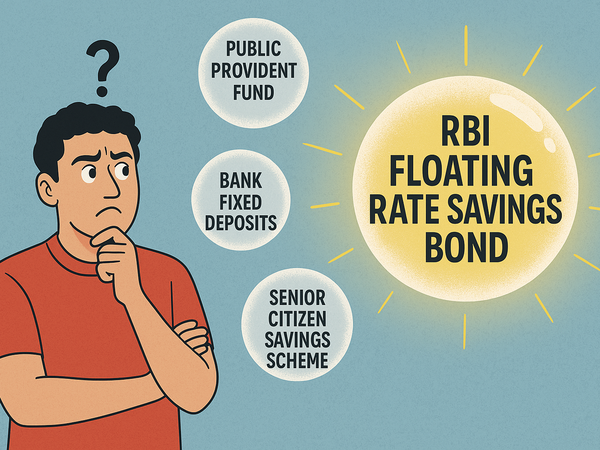
Right now, with the RBI holding the repo rate at 5.25% after a long run of cuts, floating-rate bonds are actually out-yielding most bank FDs. But that edge isn't permanent, and it comes bundled with a seven-year lock-in most FDs don't ask you to accept.
Why This Comparison Actually Matters in 2026
For years, choosing between a fixed deposit and a bond used to be a fairly simple exercise: compare the interest rates, pick the higher one, move on. That's no longer quite true. After a long stretch of RBI rate cuts through 2025, the central bank held the repo rate steady at 5.25% at its June 2026 meeting, and that pause has genuinely reshaped the return picture across fixed income products. The gap between FDs and bonds has narrowed in some places and widened in others, depending on which specific instrument you're looking at, which makes this a much more nuanced decision than it used to be.
Fixed-Rate FDs: The Devil You Know
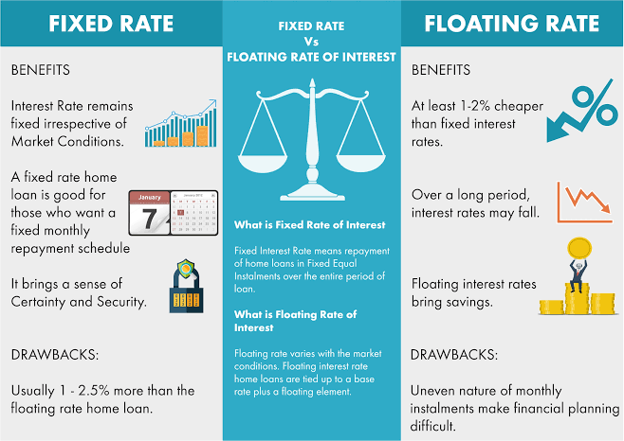
A fixed-rate FD does exactly what the name promises: you lock in a specific interest rate at the time of investment, and it stays exactly the same until maturity, regardless of what happens to market rates afterward. Right now, SBI's retail FD rates for general customers range from roughly 3.05% to 6.45% depending on tenure, with senior citizens earning a bit more, generally 3.55% to 7.05%. Smaller finance banks and NBFCs push considerably higher — some FD options currently offer up to 8.15%, though that comes with a corresponding step up in credit risk compared to a large public sector bank.
The appeal here is certainty. Once you've locked in your rate, market volatility becomes someone else's problem. If the RBI cuts rates further, your FD keeps paying what you signed up for. That predictability is genuinely valuable for anyone who wants to know exactly what their maturity value will look like on day one, without needing to track monetary policy announcements.
Floating-Rate Bonds: Riding the Wave Instead of Betting Against It
Floating-rate bonds work on the opposite principle. Instead of locking in a number, the interest rate resets periodically based on a reference rate, meaning your return moves up and down with the broader interest rate environment, rather than being frozen at whatever level existed when you invested. India's most prominent example is the RBI's Floating Rate Savings Bond, which currently pays 8.05% per annum. That rate isn't fixed for the bond's full seven-year tenure — it resets every six months, calculated as the prevailing NSC rate plus a fixed 0.35% spread.
In January 2026, with the NSC rate at 7.70%, that combination produced the current 8.05% coupon. Some banks also offer floating-rate FD variants tied to the repo rate, like SBI's Floating Rate Bulk Term Deposit scheme, though these are less common for retail investors than the standard fixed-rate product. The tradeoff for that flexibility is real: if the RBI or the government lowers rates further, your floating-rate return falls right along with it. You're not protected from a downward rate cycle the way a fixed-rate product locks you into your original number.
Interest Rate Protection: It Depends Entirely on Which Direction You're Betting
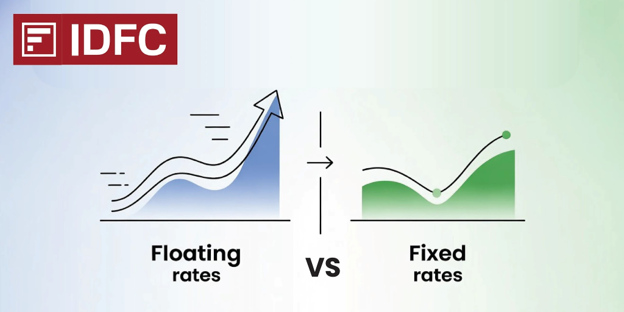
This is really the crux of the whole comparison, and there's no universally correct answer — it depends on where you think rates are headed. If you expect the RBI to cut rates further, a fixed-rate FD protects you by locking in today's rate before it potentially drops. If you expect rates to hold steady or eventually rise again, a floating-rate bond lets your return climb right along with the broader market instead of leaving you stuck at a lower, previously-locked rate. Given that the RBI has already paused its cutting cycle as of mid-2026, floating-rate bonds are currently in a reasonably favorable position — you're capturing a rate tied to where NSC yields sit today, without having missed out on further downside if cuts eventually resume.
Liquidity Lock-In: FDs Have the Clear Edge
Here's where fixed deposits pull ahead decisively. FD tenures range anywhere from 7 days to 10 years, and while premature withdrawal typically comes with a penalty of around 0.5%–1% off your rate, that flexibility genuinely exists. You can get your money back relatively quickly if you need it. RBI Floating Rate Savings Bonds, on the other hand, come with a strict seven-year lock-in and no secondary market to sell them on early. The only real exception is a limited early exit window available specifically for senior citizens. If there's any real chance you'll need this money before seven years are up, that lock-in is a serious practical constraint worth weighing heavily against the higher headline rate.
Tax Efficiency: A Meaningful Difference for Higher Tax Bracket
FD interest is always taxed as "Income from Other Sources" at your full income slab rate, with no preferential treatment regardless of how long you hold the deposit. TDS kicks in once interest crosses ₹40,000 in a year for regular depositors, or ₹50,000 for senior citizens. Floating Rate Savings Bonds are taxed similarly — interest is added to your total income and taxed at your slab rate, with TDS applying once annual interest crosses ₹10,000. Listed bonds more broadly, however, can offer a real tax advantage: when held for more than 12 months, they may qualify for a flat 12.5% long-term capital gains rate, which is meaningfully more tax-efficient than slab-rate taxation for anyone in the 30% bracket. That specific advantage applies to listed corporate bonds rather than the RBI's savings bond, so it's worth checking the exact structure of whichever bond you're considering.
Which One Actually Fits Your Situation?
If certainty matters more to you than chasing the highest possible rate, and you want the flexibility to access your money before a long lock-in period ends, a fixed-rate FD remains the more practical, conservative choice. If you're comfortable with a seven-year commitment, believe rates are more likely to hold or rise than fall further, and want sovereign-backed safety with a currently attractive yield, the RBI Floating Rate Savings Bond is a genuinely strong option in the current environment. Plenty of conservative investors split their fixed-income allocation across both — shorter-tenure FDs for near-term liquidity needs, and floating-rate bonds for the portion of their portfolio they're comfortable locking away for the long haul.
FAQs
1. Is the RBI Floating Rate Savings Bond rate guaranteed for the full seven years?
No. The rate resets every six months based on the prevailing NSC rate plus a 0.35% spread, so it can rise or fall over the bond's tenure.
2. Can I withdraw money early from a floating-rate bond?
Generally no, except for a limited early exit option available specifically to senior citizens. There's no secondary market to sell the RBI Floating Rate Savings Bond before maturity.
3. Which is safer, an FD or a floating-rate bond?
The RBI Floating Rate Savings Bond carries a sovereign guarantee, making default risk essentially zero. Bank FDs are covered by DICGC insurance only up to ₹5 lakh per depositor per bank.
4. Is FD interest taxed differently from bond interest?
Both are generally taxed at your income slab rate, though listed bonds held over 12 months may qualify for a flat 12.5% long-term capital gains rate, which the RBI Floating Rate Savings Bond doesn't offer.
Latest Posts