
Gold ETFs vs Physical Gold Which Is the Smarter Buy in 2026
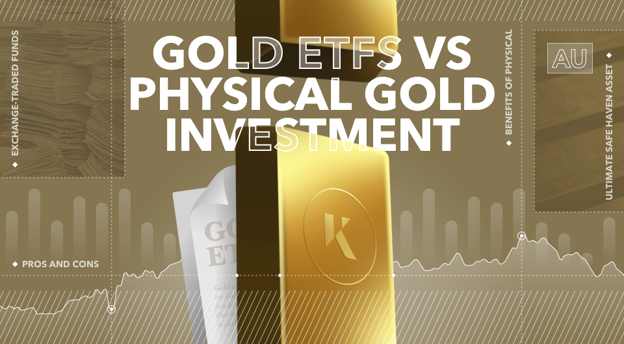
And while the continuous price high seems a wonderful profit on investing portfolios, it divides buyers into two segments, those that open their brokerage app and press “buy” to join the profit rally, or those who rush to their jewellers to bring home a metal they can physically hold and while both buyers bet on the same metal,the experience and liquidity of the two cannot simply be compared.
A note before we start: this is a comparison of how these two options actually work, not a recommendation to buy either one. Whether gold belongs in your portfolio at all, and in what form, depends on your own financial situation. Kindly consult with financial advisors and perform personal analysis to make informed decisions prior to purchase.
Table of Contents
1. The Core Difference: What You Actually Own
2. Full Comparison: Costs, Liquidity, Storage, Taxes
3. Why Gold Is Having This Kind of Moment
4. Pros and Cons of Each
5. A Third Option Worth Knowing: Sovereign Gold Bonds
6. What Different Types of Buyers Tend to Choose
7. FAQs
8. Conclusion
The Core Difference: What You Actually Own
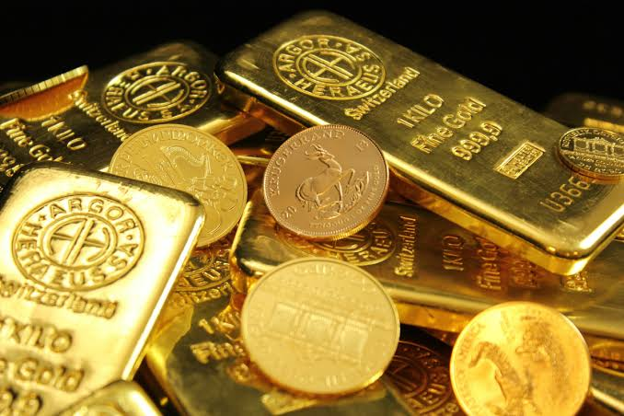
A Gold ETF allows you to trade across gold prices in the form of shares on a stock exchange, usually on behalf of a bullion already owned in a vault on the fund’s behalf. A Gold ETF doesn’t provide you any physical access to the metal, but simply allows you to lay a claim on a part of it, a claim that’s redeemable in cash instead of physical gold. Buying physical gold on the other hand provides you direct ownership in the form of either a coin, a bar, a jewellery etc and involves no party or fund between you and your asset.
On paper that distinction might sound simple and abstract but it actually differs when markets experience stress or have to withstand pressure. ETFs carry a slight risk with the custodian or fund being the one holding your capital while a physical gold asset carries a more practical risk in the form of thefts, loss or storage costs, something that would not be as significant in the ETFs.
Full Comparison: Costs, Liquidity, Storage, Taxes
|
Factor |
Gold ETFs |
Physical Gold |
|
Minimum investment |
Fractional — buy any dollar amount |
Fixed sizes (coins/bars); larger upfront cost |
|
Storage |
None required — held electronically |
Safe, bank locker, or vault; ongoing cost |
|
Insurance |
Built into fund structure |
Separate policy usually needed |
|
Liquidity |
Instant, trades during market hours |
24–48 hours minimum; dealer-dependent |
|
Selling in a downturn |
Sell instantly at quoted price |
Dealers may widen spreads 3–5% or pause buying |
|
Ongoing fees |
Expense ratio, typically 0.15–0.5% annually |
No annual fee, but storage/insurance costs add up |
|
Counterparty risk |
Yes — fund, custodian, exchange |
Minimal, if properly stored and verified |
|
Ideal holding period |
Any — flexible |
Longer-term, due to transaction friction |
Why Gold Is Having This Kind of Moment
Currently, Gold is witnessing an unusual volume of movement and investment across both categories. According to the World Gold Council, global gold ETF inflows hit $89 billion in 2025, a 22 time increase over its $4 billion value in 2024, and has already reached $24 billion within the first two months of 2026 while looking set to break newer records this year, while also pushing total global ETF holdings to an all-time high of 4,171 tonnes and $701 billion in assets under management.
And these investments are pouring in from various channels at once. Central Banks of Nations including the Reserve Bank of India, the People's Bank of China, and others have been buying gold at a record pace as part of broader reserve diversification. At the same time, the expectations of further Fed rate cuts make non-yielding assets like gold relatively more attractive and with the ongoing geopolitical uncertainty over multiple regions around the world, gold’s traditional perception as a safe-haven asset has spiked its demand and value across global markets. And while this may not explain the continued increase in gold prices, it’s a testament to why neither physical or Gold ETFs are truly replacing one another, but rather growing simultaneously at a steadier rate.
Pros and Cons of Each
|
Pros |
Cons |
|
|
Gold ETFs |
Lower cost over time for most holding periods; instant liquidity; no storage or insurance hassle; fractional buying |
Exposed to custodian and fund-structure risk; some ETFs use futures rather than physical bullion, which can cause price tracking to drift; you don't hold the actual asset |
|
Physical Gold |
Direct ownership with no counterparty dependency; useful hedge against systemic financial risk; can be passed down or gifted directly |
Storage and insurance costs add up over time; harder to sell quickly at full value; verifying purity and authenticity matters; large fixed unit sizes at high prices |
What Different Types of Buyers Tend to Choose
Both Physical Gold and Gold ETFs have sustained over a period of time mainly due to the diverse range of investors that they attract. People with smaller amounts to invest or those looking to invest for shorter periods of time, or perhaps who hold a general preference for keeping everything inside a brokerage account tend to lean toward ETFs. Further add the combination of lower fees, instant liquidity, and zero storage hassle and it becomes difficult to say no or choose otherwise. On the other hand, those who are motivated specifically by systemic risk protection, generational wealth transfer, or simply wish to hold an asset with zero dependency on any financial institution lean towards physical gold, while being aware of the added cost and reduced liquidity as the cost of holding their asset close to their heart and sights.
And in fact, plenty of investors ultimately do both. They optimize ETFs for the bulk of their gold exposure while emphasizing on the ETF’s acquisition cost and flexibility advantage, while holding a smaller amount of physical gold specifically for the kind of scenario where having something in your own hands, outside any system and safe within your reach appears to be of greater importance.
Conclusion
Honestly, it's difficult to make a clear distinction as the “smarter” choice between the segments of Physical Gold and Gold ETFs without evaluating what you expect your investments to provide you with. When you focus towards acquisition and maintaining cost, flexibility on your investment and the scope of liquidity, Gold ETFs become the more obvious choice, while also getting exposure for price variations without hassle of storage or dealer charges. Instead if you focus towards holding assets without external dependency, and something that can perish and be easily passed on or relied upon during moments of need or crisis, physical gold provides value that ETFs cannot simply match. And in 2026, neither choice appears to be wrong, and perhaps the smarter choice has become to not pick a single side within this debate but actually understand and prioritize investments across the two appropriately to ensure it fulfills your needs.
Latest Posts