
Google Pixel 10 Pro vs. Pixel 8 Pro Evaluating Android 17 Features, GPU Stability Patches, and Battery Efficiency Upgrades
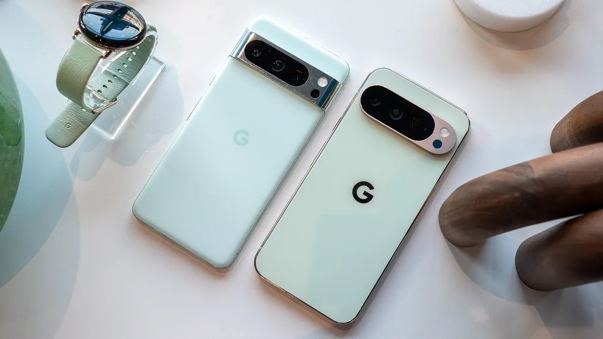
And with newer models launching every year, it’s even more difficult to resist the urge. If you’re someone who feels similarly about switching to the new Google Pixel 10 Pro or sticking with your timeless Pixel 8 Pro, you’re right to wonder and with Google running the exact same operating system on both phones, this is the most like-for-like comparison that Google has offered in many years!
With the recent stable release that landed in June 2026, Both Pixel 10 Pro and Pixel 8 Pro are now supported by Android 17, and having the same software strips away a lot of noise that usually surrounds these upgrade dilemmas. So now the question remains, is the integration of two years of advanced hardware, chip design, and several security and stability patches into a new phone better value than your fully optimized Pixel 8 Pro, while it’s doing all the tasks that you need it to do?
Table of Contents
- Quick Verdict
- Hardware and Design
- Performance: Tensor G5 vs. Tensor G3
- Android 17 on Both Phones
- GPU Stability: The Bugs and the Fixes
- Battery Life and Efficiency
- Who Should Actually Upgrade
- FAQs
- Conclusion
Quick Verdict
If you don’t wish to dive into the technicalities or are simply looking for a verdict and advice, the Google Pixel 10 Pro is a smaller, faster and efficient device with a genuinely brighter display and software support runway but the leap from Pixel 8 Pro is actually significant too. The Pixel 8 Pro is now nearly two years old, and being upgraded to Android 17, is still a wonderfully capable and reliable device. It might show its shortcomings in benchmarks and battery capacity but continues to excel in day-to-day usability.
Hardware and Design
With the Pixel 10 Pro, Google made a deliberate choice that may not be clearly visible at the first glance or even until you hold the two side by side, the 10 Pro is relatively smaller. The Pixel 10 Pro comes with a 6.3 inches display, a small shrink from the 6.7 display of the Pixel 8 Pro. This allows 10 Pro to break into the compact flagship category while also making it 6 grams lighter.
|
Spec |
Pixel 10 Pro |
Pixel 8 Pro |
|
Display |
6.3" LTPO OLED, 3300 nits |
6.7" LTPO OLED, 2400 nits |
|
Resolution |
2856×1280, 497 PPI |
2992×1344, 490 PPI |
|
Chipset |
Tensor G5 (TSMC 3nm) |
Tensor G3 (Samsung 4nm) |
|
RAM |
16GB |
12GB |
|
Battery |
4870 mAh |
5050 mAh |
|
Weight |
207g |
213g |
|
Biometrics |
Ultrasonic in-screen fingerprint |
Optical in-screen fingerprint |
|
Charging |
Qi 2.2 wireless (Pixelsnap) |
Standard Qi wireless |
|
Water/Dust Resistance |
IP68 |
IP68 |
|
Starting Price |
$1199 |
$999 (at launch) |
The Pixel 10 Pro takes the edge over the 8 Pro with the brightness jump from 2400 nits to 3300 nits, allowing the phone to be more usable in direct sunlight, something that matters much more than other specifications commonly hyped and valued. Another small but important upgrade is a switch to the ultrasonic in-screen fingerprint making the device more faster, while also enhancing security and reliability in wet or cold conditions, unlike the sensitive optical sensor of the 8 Pro.
Performance: Tensor G5 vs. Tensor G3
Now this is a component that’s more complicated than Google’s marketing suggests. THe Tensor G5 is built on TSMC’s 3nm process, an actual upgrade over the Tensor G3’s Samsung 4nm node, and Google claims that this enables its CPU to run roughly 34% faster on average than the previous generations, with AI–focused tensor processing further pushing it to become 60% faster.
Yet in actual tests, the picture is much more similar than far apart. The Tensor G5 matches with Qualcomm’s two-year old Snapdragon Gen 3 in CPU performance, but falls behind the more recent flagship silicon processors from Qualcomm and Samsung in broader benchmarks. And there’s quite a justified reason behind it, Tensor clips generally prioritize AI and camera processing over raw benchmark supremacy but also makes the leap from G3 to G5, significant but not totally world-changing.
The Tensor G5 manages to pull further ahead in its efficiency and AI workloads. AIs like Gemini Nano run much faster on-device, and the newer Image Signal Processor enhances the camera system, even before creating a measurable boost of new megapixels.
Android 17 on Both Phones
Softwares are often considered the deal-breakers in modern phone comparisons and in this case, they do not show up significantly. Android 17 became stable in June 2026, and all the Pixel line-ups right from Pixel 6 to the latest Pixel 10 received the update simultaneously, while also continuing to receive monthly patches on the same schedule as well.
The Android 17 release also infused quality improvements into both devices with the introduction of ADB Wi-Fi 2.0 for more reliable wireless debugging and development tooling, alongside greater adaptability and camera/media enhancements for both devices.
GPU Stability: The Bugs and the Fixes
The release of Android 17 wasn’t as smooth as anyone might’ve expected. Early versions introduced multiple bugs including disappearing home screen widgets, system crashes tied to Gemini, Bluetooth re-pairing failures, something that Google’s monthly patches have been trying to fix ever since.
Here, it is important to note and consider that the latest August 2026 update shipped GPU performance improvements aimed specifically at heavy workloads, along with a fix for gaming-app crashes under certain conditions, exclusively for Pixel 10 series. Pixel 8 and 9 series users also received security patches, but not the same GPU-targeted improvements, simply because their hardware is not necessarily capable of handling the fixes that could be applied to the Pixel 10 series.
|
Update |
Pixel 10 Pro |
Pixel 8 Pro |
|
June 2026 (Android 17 launch) |
Full feature set |
Full feature set |
|
July 2026 patch |
Stability fixes, boot loop repair |
Stability fixes, boot loop repair |
|
August 2026 patch |
GPU performance fixes, gaming crash fix |
Security patch only |
Battery Life and Efficiency
When you look plainly at the specifications sheet, the Pixel 8 Pro might appear to have a larger battery - 5050 mAh compared to the 4870 mAh in the Pixel 10 Pro, but it necessarily does not reflect the raw capacity and SOT provided by the two. Pixel 10 Pro series noticed the move to TSMC’s 3nm process, a move specifically focused at improving battery efficiency, and if Google’s own numbers are to be believed, the Pixel 10 devices promise over 30 hours of battery life, while the Pixel 9 provide roughly 24+ hours, with Pixel 8 series being built over an older, Samsung processor, trailing both its successors.
The conclusion? Despite holding a smaller battery, Pixel 10 Pro users often report the device lasting comparably or slightly even longer through a full day as compared to the Pixel 8 pro, especially with the use of AI platforms where the chip’s efficiency matters the most!
Who Should Actually Upgrade
If your Pixel 8 Pro is running absolutely fine, capable of holding a charge well, not troubling you with the GPU-related snags of Android 17 and fulfilling your daily requirements, you could argue that a change wasn’t necessary, at least not enough to justify the cost of a new phone.
But the upgrade starts to make sense if you’re struggling with battery degradation, require a brighter display for being under the sunlight or simply rely on AI based processes and GPU-intense practices like Illustrations or Gaming on your phone. It’s not exactly an essential upgrade, but simply one that actually provides newer value for you as a user!
FAQs
1. Do the Pixel 10 Pro and Pixel 8 Pro run the same version of Android?
Yes. Both are currently running Android 17, which reached stable release in June 2026 and rolled out simultaneously across the supported Pixel lineup.
2. Is the Pixel 10 Pro actually faster than the Pixel 8 Pro?
Yes, though the gap is moderate rather than dramatic. The Tensor G5 shows meaningful gains in single-core performance and AI workloads, while multi-core and overall benchmark scores still lag behind more powerful rival chipsets.
3. Does the Pixel 8 Pro still get GPU stability fixes?
It continues to receive the same monthly security patches as the Pixel 10 series, but the August 2026 GPU-specific performance improvements were targeted at the Pixel 10 series only.
4. Which phone has better battery life?
Despite a smaller battery capacity on paper, the Pixel 10 Pro's more efficient 3nm chip generally delivers comparable or better real-world battery life than the Pixel 8 Pro.
5. Is it worth upgrading from a Pixel 8 Pro to a Pixel 10 Pro?
It depends on your priorities. If you value display brightness, a smaller form factor, or GPU-related fixes, it's worth considering. If your Pixel 8 Pro is performing well, the upgrade isn't essential.
Conclusion
There are going to be various campaigns and conversations that are bound to leave you wanting an upgrade, promising a dramatic transformation and promising a better experience. The honest truth is there isn’t much to change if your device currently works just fine. Pixel 10 Pro is definitely a smaller, brighter and more efficient phone that runs a similar software more efficiently while being packed with performance gains, but there’s arguably not enough to make the switch purely for performance upgrades, and actually a good news for extracting greater mileage from your previous investments. Afterall, the decision to upgrade in the end, truly comes down to your use and your patience, not simply the values involved in the upgrade.
Latest Posts