
How to Protect Your Hair from Heat Damage Daily Habits for Stronger Strands
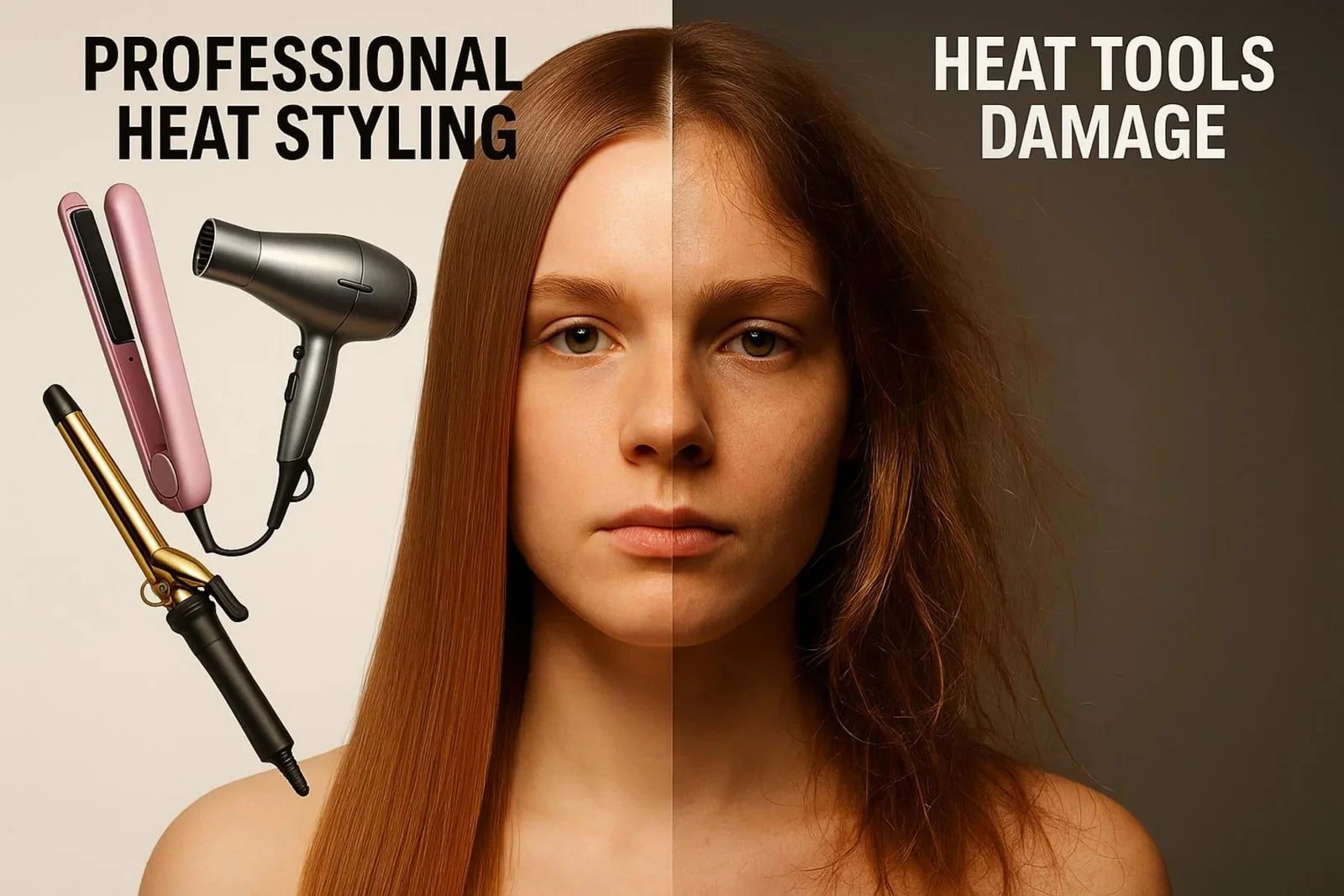
Let's make this as straightforward as possible for you: I'll help you break down the steps into a form that resembles a routine and not a 12-step hair sermon.
1. Start in the Shower
Healthy hair with heat-resistance begins long before you use an electrical appliance on your hair!
2. Use a Gentle Shampoo and Conditioner
Try to use a shampoo free of harsh chemicals. A sulfate-free shampoo will leave the hair clean, but without damaging it or making it more vulnerable to heat.
Use a good, hydrating conditioner for your hair type. If you have fine hair, go for something lighter; if you have thick hair, use something heavier. (Remember that the 'rule of thumb' is to shampoo the scalp and condition the mid-lengths and ends, as those are the fragile parts of the hair and will benefit the most from conditioning.)
3. After You Get Out of the Shower
Drying your hair can lead to significant breakage, especially if you rub it vigorously with a towel. Try blotting or wrapping it in a soft microfibre towel, as this will cause less friction during the drying process, resulting in lower levels of hair breakage.
The Necessity of Heat Protectant
Heat protectant can be thought of like sunscreen for your hair: always wear something between the heat of your styling tools and the hair itself when using a heat source.
- Fine or oily hair: apply a lightweight spray and concentrate primarily on the mid-length ends.
- Thick and coarse/curly hair types: a cream or serum will provide you with better coverage and smooth glide.
There is no one way to apply heat protectant to your hair. You can apply it to damp hair before you blow-dry (best) or to dry hair before curling or straightening (also acceptable). If you are going to re-style your hair the day after you've already styled it with heat, then you will need to re-apply heat protectant; what you applied yesterday does not magically stay in your hair today.
Setting Your Tools to a Lower Temperature (More Than You Might Think)
Many styling tools default to a temperature that your hair does not need.
- Fine or fragile hair usually needs around 180°C - 190°C.
- A medium/normal hair texture can usually withstand temperatures lower than 200°C.
- A thick/coarse hair texture or very curly hair may only need slightly more than that, but maxim heat is not required.
If you are able to achieve your desired outcome and style at a lower temperature setting than you typically use, every time this happens, you are achieving a "less damage per day" result! Remember also that one slow steady pass over a section of hair is much better than several fast passes over the same section of hair!
Let Hair Do Some of the Work Itself
Bonus points are not given for drying without the use of equipment.
- Allow your hair to naturally dry for 70-90% of the drying process before utilizing a blow dryer.
- Use the nozzle on your blow dryer and continue to move it around. Point the air down the hair shaft so that the hair cuticles become smooth and appear shiny.
- Use your flat iron and curling iron to finish/smooth out the top layer of your hair and touch up on your hairstyle, not to completely restyle your hair every day.
Even a very small decrease in time spent with heat adds up over the course of a few months.
Heat Smart Daily Habits
Many people lose the battle of protecting their hair, not in the larger treatments where they have to take more time, but during their day-to-day routine where they rely on autopilot choices.
Give your hair scheduled heat days
You want to create a plan that can help your hair stay healthy. Try this:
- Use 2-3 scheduled days per week to use heat for large styling.
- Don't use heat on your off days. For example, use dry shampoo, curl refreshing sprays, braids, buns or slicked back hair instead of taking heat on your off days.
This way you are looking put together without attacking your hair seven days a week.
Trim and treat on a schedule
Although you cannot undo heat damage, you can prevent it from getting up the hair strand.
- Regular trimming (every six to ten weeks, depending on rate of fraying) prevents split ends from turning into breaks.
- Once per week a deep conditioning treatment or bond repair treatment replaces moisture and fortifies the cuticle for better tolerance of styling damage.
These are preventive measures rather than a one time fix.
Tailor Products to Your Hair and Your Lifestyle
So many consumers purchase products for their idealized hair rather than their actual hair or schedule.
For example,
- If you wear your hair mostly straight, use a quality heat protectant and smoothing serum rather than 5 separate curl creams that you will rarely use.
- If you dye your hair or have prior damage, choose products that contain protein, ceramides, and/or bond builders, and reduce your heat use even more.
- If you are short on time every morning, develop a realistic regimen; maybe you will blow dry once or twice a week for the use of heat, and then use heat-free ways to refresh.
The best regimen is the one you can accomplish on any random Tuesday, not just on Self-Care Sunday.
The Bottom Line: Stronger Strands Come from Consistency
The secret to protecting hair from heat damage is not a single magic product or abandoning styling tools, but rather building a series of small, consistent habits:
- Begin with hair that has been conditioned properly and has been dried only lightly.
- Always use heat protecting products.
- Use only as much heat as necessary to obtain your desired results, and work with only as many passes through your hair as you need for those results.
- Include days without heat styling; take periodic trims; and use weekly treatment options that do not involve heat.
Follow these tips regularly and your hair can successfully manage a contemporary, styled lifestyle without showing (or appearing to show) any signs of undergoing a transformation through heat.
Latest Posts