
Navi, Fi Money, Jar The Fintech Apps Turning Saving Into a Habit for Young India

Fi Money built its identity around digital banking and money management, although its banking service has since transitioned away from the Fi app. Jar takes a more focused approach, encouraging users to save small amounts regularly by buying digital gold. The important distinction is that these aren't interchangeable savings accounts. Each product solves a slightly different problem, and some of the services have changed over time. For young Indians, that makes the larger fintech story more interesting: technology is increasingly being used not just to manage money, but to shape everyday financial behaviour.
Why Saving Has Become a Behavioural Problem
For a young professional, saving money often isn't difficult because the person doesn't understand that saving is important. The problem is that spending is immediate while saving is abstract. Your salary arrives. Rent goes out. UPI handles lunch. A subscription renews. Someone sends a payment request. Suddenly it's the 25th of the month and the amount you planned to save has quietly disappeared. Traditional financial advice often says to “save first and spend later.” Sensible advice, but easier said than done. Fintech companies are approaching the problem from a different direction. Instead of expecting people to exercise perfect financial discipline every month, they are building automation into the experience. The underlying idea is simple: if saving requires fewer decisions, people may be more likely to keep doing it. That is a behavioural-design problem as much as it is a financial one.
Navi Is Building a Broader Financial Ecosystem
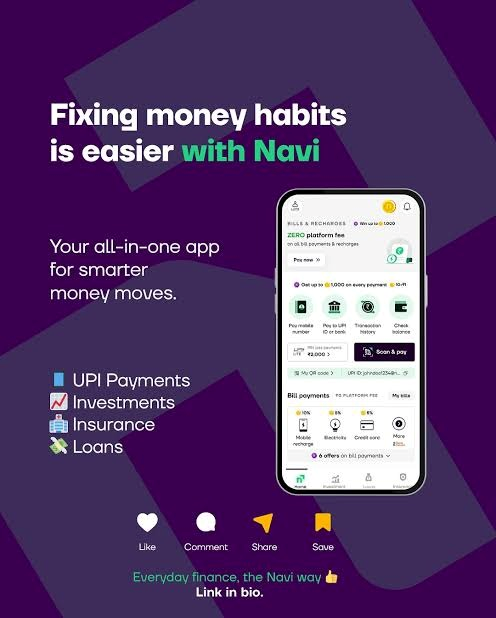
Navi's approach is considerably broader than a dedicated savings app. The company describes its mission as making financial products and services simple, affordable and accessible, and its ecosystem currently spans UPI, loans, insurance and mutual funds. Navi UPI operates as an NPCI-approved Third Party Application Provider, while its lending and insurance products are offered through separately regulated entities within the Navi group. Its investment offering is another important part of the picture. Navi Mutual Fund offers products including index funds, ELSS, equity and debt funds, with SIP and lump-sum investment options. The company's investment platform says investors can begin with amounts as low as ₹100 for some funds, subject to the relevant scheme terms. For younger users, the attraction is obvious. The journey from having money in a bank account to investing a portion of it can happen digitally without the paperwork-heavy experience associated with older financial services. But convenience deserves a reality check. Navi is not simply a “saving app.” Its ecosystem also includes credit products. Making borrowing easier can be useful when used responsibly, but easy access to credit shouldn't be confused with having more money.
Fi Money Made Personal Finance Feel More Like a Product
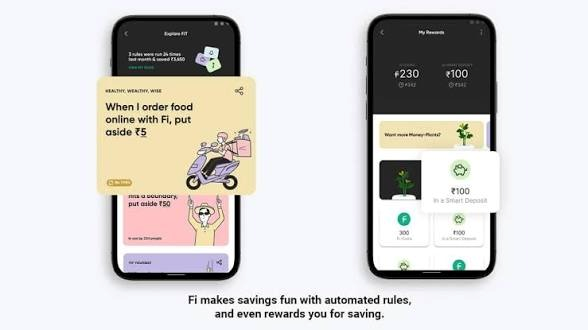
Fi Money entered the market with a different proposition. It tried to make banking and money management feel more intuitive for a generation accustomed to managing almost everything from a phone. Its Federal Bank-linked savings account offered digital banking features alongside tools designed to help users understand their finances, invest and make payments. The experience was built around the idea that your bank account shouldn't merely tell you how much money you have; it should help you understand what you're doing with it. However, Fi's current status is an important part of the story.
As of September 2026, Fi's website says new savings accounts can no longer be opened through the Fi app and existing users are being directed to the FedMobile app. The company also states that Fi-Points accrual ended on March 20, 2026, with redemption ending on March 31, 2026. That evolution is worth highlighting because fintech moves quickly. A product that was once positioned as a digital banking alternative can change significantly as partnerships, regulations, business models and customer needs evolve. Fi's story therefore isn't only about a particular app. It shows how difficult it can be for fintech companies to maintain a consumer-facing financial ecosystem over the long term.
Jar Is Turning Small Savings Into a Gold Habit
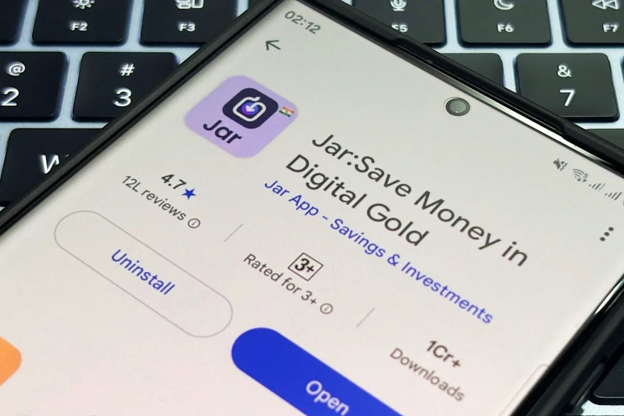
Jar takes the most focused approach of the three. Rather than trying to become a complete banking ecosystem, Jar centres its proposition around saving through digital gold. The platform allows users to set daily, weekly or monthly savings amounts, with its current website advertising entry points from ₹10. Users can also make one-time purchases and sell their digital gold through the platform. The behavioural appeal is easy to understand. Saving ₹10 or ₹50 can feel almost insignificant. Doing it consistently creates a different psychological experience. Instead of waiting until the end of the month and hoping there is money left over, the user creates a small financial commitment that happens repeatedly.
Jar itself frames this as building a savings habit rather than relying entirely on willpower. Its recent guidance on automated saving makes essentially the same behavioural argument: removing the repeated decision can make consistency easier. That doesn't mean digital gold is equivalent to cash savings. Gold prices fluctuate, and users should understand the product, pricing, taxation and liquidity arrangements before treating it as a substitute for an emergency fund.
The Real Innovation Is Habit Formation
This is perhaps the most interesting part of the fintech boom. The technology itself isn't particularly revolutionary. Automatic transfers, digital payments and recurring investments have existed in various forms for years. What's changing is how those tools are packaged. Fintech apps increasingly borrow ideas from behavioural psychology and consumer technology. Progress indicators, reminders, automation, rewards and small contribution amounts can make an otherwise boring financial task feel more tangible. And there is a reason this matters for younger Indians. The first few years of earning often involve a strange combination of financial independence and financial experimentation. You're earning for the first time, but you're also discovering rent, taxes, insurance, credit cards, EMIs, investments and family responsibilities almost simultaneously. A system that helps someone develop a saving habit at ₹500 a month may ultimately be more valuable than an app that simply shows them a complicated portfolio dashboard.
But Convenience Can Create New Risks
There is a flip side. The easier financial products become to access, the easier it can become to make decisions without fully understanding them. A loan application can take minutes. An investment can be initiated from a phone. A recurring purchase can happen automatically. That's great when the underlying decision is sound. It can be problematic when convenience removes the pause that once forced people to think. Young investors should therefore ask basic questions before putting money into any fintech product. Who is providing the financial service? Is the entity regulated, and by whom? What exactly happens to the money? What fees apply? How quickly can the money be withdrawn? What risks are involved? Those questions aren't anti-fintech. They're what responsible fintech adoption looks like.
Saving Apps Are Not a Replacement for Financial Planning
An app can automate a habit, but it can't decide what your money is ultimately for. Someone building an emergency fund has a different requirement from someone saving for a holiday. Someone investing for retirement has a different time horizon from someone planning to buy a car next year. That distinction matters because “saving” and “investing” aren't interchangeable. A savings product generally prioritises accessibility and stability. Investments involve risk in exchange for the possibility of higher returns. Digital gold, for example, is an asset whose value can move with the gold market; it shouldn't automatically be treated as a cash-equivalent emergency reserve. The best fintech experience, therefore, isn't necessarily the one with the most features. It is the one that fits the financial job you're actually trying to accomplish.
What This Means for Young India's Money Habits
Navi, Fi Money and Jar represent different stages of India's fintech evolution. Navi illustrates the move towards a broader digital financial ecosystem, where payments, credit, insurance and investments sit within one experience. Fi demonstrated the appeal of making banking and money management feel more consumer-friendly, while its current transition also highlights how quickly fintech business models can change. Jar shows how a narrow product can focus heavily on habit formation by turning small recurring contributions into a structured savings behaviour. The larger trend is unlikely to disappear. Young consumers increasingly expect financial services to be as simple and responsive as the other apps they use every day. That puts pressure on banks, fintech companiesand investment platforms to remove unnecessary complexity. But the responsibility doesn't sit entirely with the apps. Consumers still need to understand what they are buying, where their money is going and what risks they're accepting. The most useful fintech innovation may ultimately be the one that makes good financial behaviour boringly easy. Because when saving becomes an automatic part of everyday life rather than a monthly exercise in self-control, building wealth becomes less about having perfect discipline and more about having a system that keeps working when motivation inevitably disappears.
FAQs
1. Is Navi a savings app?
Not in the narrow sense. Navi operates a broader financial-services ecosystem that includes UPI, loans, insurance and mutual fund investments. Different products are offered through different Navi group entities and are subject to their respective regulatory frameworks.
2. Can new users open a savings account through Fi Money?
As of September 2026, Fi's website states that new savings accounts cannot be opened through the Fi app. Existing users are directed to the FedMobile app as banking services transition.
3. How does Jar help users save?
Jar allows users to set daily, weekly or monthly saving schedules, with its current platform offering digital gold purchases starting from ₹10.
4. Is digital gold the same as keeping money in a savings account?
No. Digital gold is an investment in an asset whose market value can fluctuate. It should not automatically be treated as a substitute for an emergency fund or a bank deposit.
5. Why are fintech apps popular among young Indians?
Their appeal comes from convenience, automation, mobile-first experiences and smaller entry points. For many users, these features can make financial tasks easier to start and repeat.
Latest Posts