
OpenAI's IPO Countdown What It Means for the World
OpenAI finds itself in just that situation, at the peak of its growth and at the footsteps of becoming a public company, a move that can either be described as a natural move for a company of their stature, or a governance experiment that public markets have never had to manage before.
Table of Contents
1. What's Actually Confirmed
2. How OpenAI Got Here
3. The Numbers Behind the Valuation
4. Why the Governance Structure Is the Real Story
5. The Risks Investors Are Watching
6. OpenAI vs. Anthropic vs. SpaceX: The 2026 IPO Race
7. What a Trillion-Dollar Listing Would Mean for the World
8. Conclusion
What's Actually Confirmed
OpenAI on May 22,2026 had confidentially filed a draft registration statement with the SEC and only made the filing public on June 8, while joining the wave of AI and Tech giants working towards Wall Street this year. OpenAI’s private and confidential filing had allowed it to begin the SEC’s review process privately, without having to publicize its financials, risk factors or planned terms to the public and till date, the company hasn’t released any official confirmed tickers, public prospectus or valuate estimates and locked-in listing date, which it might have had to otherwise in a public filing.
OpenAI has also reportedly been working closely with major banks in the likes of Goldman Sachs and Morgan Stanley in drafting its offering, making it the most anticipated and possibly the largest potential public market debut in listing history. Certain reports also suggest that the company could be looking at a valuation as high as $1 trillion, including plans to raise $60 billion in the process. And while the numbers are enticing enough to captivate investors around the world, the timing of the listing continues to remain a doubt with advisors believing a listing could happen within 2026 while OpenAI’s own CFO, Sarah Friar, believes that the company is aiming for 2027. On the official record, OpenAI has also publicly downplayed the urgency by stating "An IPO is not our focus, so we could not possibly have set a date," through a company spokesperson.
How OpenAI Got Here
OpenAI’s path to becoming a potentially trillion-dollar listing is a genuinely unusual one. It launched as a nonprofit research lab in 2015, with the sole focus of keeping AI development free of ordinary profit incentives. In 2019, it created a “capped-profit” subsidiary to attract the capital that frontier AI actually required, which led to Microsoft’s multibillion-dollar investment. Its subsequent launch of ChatGPT in November 2022 established OpenAI as a household name in the AI Segment before OpenAI dipped into a governance crisis with the board firing CEO Sam Altman in November 2023, only to reinstate him following scrutiny from employees, investors as well as Microsoft.
The instability during that period allowed OpenAI to reposition itself for 2025’s recapitalization as a public benefit corporation, a PBC that opened pathways for the company to undergo a traditional IPO, something that the previous status of a non profit made difficult to execute. Despite the change in stature, OpenAI continued in murky waters over the restructuring following Elon Musk’s lawsuit against OpenAI on statute-of-limitations grounds which was filed just days before the confidential IPO filing. The lawsuit was recently dismissed by a California jury, a move that has cleared the obstacle for the company’s path to enter public markets while also removing scrutiny and doubts over the safety of its future.
The Numbers Behind the Valuation
OpenAI’s financial background is filled with periods of extensive growth paired with exemplary spending, with the company having achieved an annualized revenue run rate of roughly $25 billion by early 2026, a substantial growth from the $20 billion mark achieved at the end of 2025. Yet despite substantial increase in revenue, OpenAI continues to estimate a loss of $14 billion in 2026 alone, with a potential estimate of reaching $115 billion in cumulative loss until 2029, and a projected first profit to be achieved somewhere in the 2030s.
|
Metric |
Figure |
|
Reported private valuation |
$850 billion+ |
|
Potential IPO valuation target |
Up to $1 trillion |
|
Reported capital raise target |
$60 billion+ |
|
Annualized revenue (early 2026) |
~$25 billion |
|
Projected 2026 losses |
~$14 billion |
|
Projected cumulative losses by 2029 |
Up to $115 billion |
|
Lead underwriters |
Goldman Sachs, Morgan Stanley |
The Risks Investors Are Watching
OpenAI’s IPO path isn’t simply being subjected to doubts over its governance but also associated with a range of risk factors that revolve around the company including:
1. Heavy Microsoft dependence. OpenAI’s revenue as well as its infrastructure access is built and integrated with its Microsoft partnership and fears of a deterioration in relationship or difference in vision could result in severe consequences for both companies.
2. Related-party transaction scrutiny. Six state attorneys have reportedly requested an SEC investigation into OpenAI’s related-party dealings, surprisingly even before the filing process has begun.
3. Intellectual property lawsuits. OpenAI also finds itself in the midst of multiple ongoing lawsuits from authors, publishers, and content creators who allege that OpenAI’s models trained and utilized copyrighted material without authorization, with the potential outcome set to impact both training costs and future model development procedures.
4. Intensifying competition. Direct competitors like Google with its Gemini and Anthropic are also competing with OpenAI over market share and space for growth, with Google competing in growth speeds through its already-profitable ecosystem.
OpenAI vs. Anthropic vs. SpaceX: The 2026 IPO Race
OpenAI has joined the race of the most valuable private companies around the world racing to enter the public markets in 2026 and in comparison, is directly in competition with other frontiers of its industry including the likes of Anthropic and SpaceX.
|
Company |
Filing Status |
Structure |
Reported Valuation |
|
OpenAI |
Confidential draft filed June 8, 2026 |
Public benefit corporation + nonprofit Foundation control |
Up to $1 trillion |
|
Anthropic |
Confidential draft filed June 1, 2026 |
PBC + Long-Term Benefit Trust for mission control |
Not fully disclosed |
|
SpaceX (merged with xAI) |
Public prospectus disclosure underway |
Traditional structure |
~$1.25 trillion (Feb. 2026) |
Notably, Anthropic also shares a near-identical structure of being a public benefit corporation paired with a mission-focused trust retaining overview of its operations, a hybrid model that could soon become a benchmark for AI Labs that approach the public market while also providing greater foundation for OpenAI’s preparations in itself.
What a Trillion-Dollar Listing Would Mean for the World
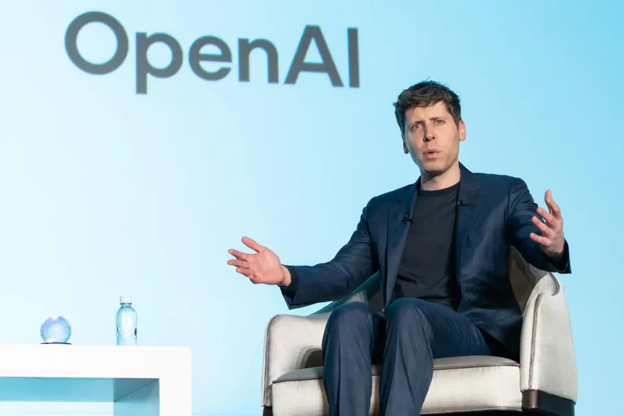
OpenAI’s listing on the public markets of Wall Street is bound to carry a ripple effect that extends far beyond its own balance sheet and the public markets. The company’s shift and transition from how hundreds of millions of people work, learn and communicate into a direct access to the public markets could possibly enable it to greater opportunities of AI infrastructure investment that CEO Sam Altman hopes garners in the range of trillions of dollars. The company could also become the premier AI frontier lab to share precedents of how "mission-first" governance structures can actually coexist with public shareholder capitalism, especially in a company of OpenAI’s massive scale.
For everyday users and users of OpenAI’s services, the listing would not likely present any immediate effect that alters how ChatGPT or its subsidiary products work overtime but could potentially add weight onto the quarterly revenue, pressuring a system that has otherwise always claimed service to be of greater importance. And whether the model and the company are able to withstand the pressure of public shareholders joining the room, appears to be the unresolved question revolving around OpenAI as well as its listing process.
Conclusion
IPOs have become an enormous frontier in the field of investments and especially when a company of the magnitude of OpenAI comes knocking, every move from its valuation to capital rise, losses, risk factors as well as other disclosures are bound to catch the public eye. And while the company’s listing valuation could simply appear as a number to many, it could define the scope of investment, growth as well as the public faith, marking the future of the company. And for OpenAI, the 26% stake that its nonprofit foundation is set to retain could characterise the trust and investments of public shareholders. For the time being, OpenAI looks set to demand Wall Street investors to bet on its model that encourages mission and profit’s co-existence, something that hasn't happened priorly in public markets and something that is bound to characterize the outcome of its IPO listing.
Latest Posts