
Peptide Serums vs. Retinol The Barrier-Repair Battle
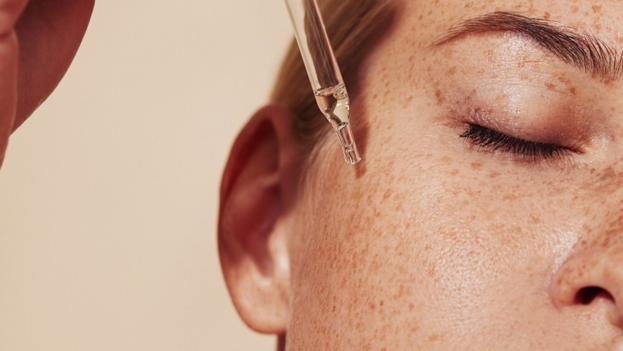
And somewhere along the journey, it’s not about which ingredient wins anymore, but about correcting the complicated world that skincare has been moulded into with people scrubbing their faces, using acidified products and utilizing the retinol strategy to gain gentle, smooth skin, with a weak barrier underneath it. And that very tension and subtle destruction is what has brought us the debate as well as the latest shift in the beauty industry.
Table of Contents
1. What Each Ingredient Actually Does
2. Peptides vs. Retinol: The Core Comparison
3. Why "Barrier Repair" Became the Focus
4. Pros and Cons of Each
5. Can You Use Both Together?
6. Who Should Choose Which
7. A Simple Routine Using Both
8. Conclusion
What Each Ingredient Actually Does
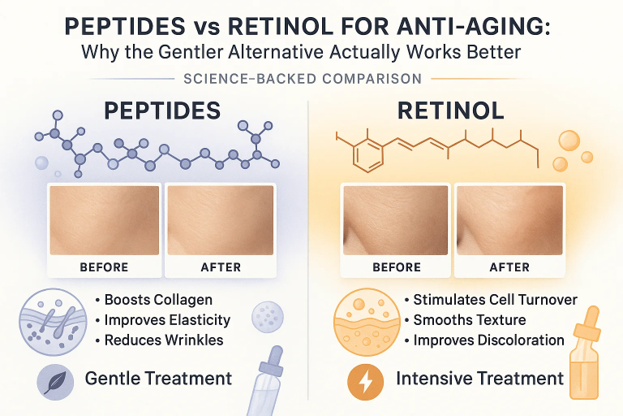
Retinol, a vitamin A derivative, has been the reigning heavyweight of anti-aging skincare for its effect on the cellular level by speeding up skin cell turnover and stimulating collagen production. These formulation and action strategies have enabled it to work efficiently in smoothing fine lines, fading pigmentation, and improving texture, but it does that while demanding your skin to renew itself faster than it naturally would, occasionally resulting it peeling, redness, and dryness, mainly in the early stages of regular use. Peptides on the other hand focus on a different mechanism. They're short chains of amino acids that act like messengers, signaling fibroblasts to ramp up repair and production without disrupting the skin's surface the way retinol does. Peptides are considered a softer mechanism, for the focus on providing signals that your skin is already familiar with, instead for forcing a renewal process from the outside in, which also allows them to work effectively on skin suitably without causing harsh results.
Peptides vs. Retinol: The Core Comparison
|
Feature |
Peptide Serums |
Retinol |
|
How it works |
Signals collagen production via fibroblasts |
Speeds cell turnover, boosts collagen directly |
|
Speed of results |
Gradual — often 8–12 weeks for visible change |
Faster — visible change often within 4–6 weeks |
|
Irritation risk |
Low; safe for daily use |
Moderate to high, especially when starting out |
|
Best suited for |
Barrier repair, hydration, gentle anti-aging |
Wrinkles, pigmentation, acne, textural resurfacing |
|
Frequency |
Morning and night |
Typically 2–3x/week to start, building tolerance |
|
Sun sensitivity |
Minimal |
Increases sun sensitivity — SPF is non-negotiable |
|
Research depth |
Growing, but more variable and smaller-scale |
Extensive, decades of clinical backing |
Why "Barrier Repair" Became the Focus
Our skin barriers, the outermost layer of our skin, is responsible to maintain moisture in the skin while protecting the skin from irritants and environmental damage, supporting the skin to recover from stress quickly. When the skin barrier is compromised, the skin begins to lose water and tends to become more reactive, which in turn makes it appear that it is aging quickly, since a health barrier doesn’t fully support healthy collagen function and development in the body. In recent years, dermatologists have also observed a notable trend - patients have been increasingly reporting concerns of redness, sensitivity, and premature fine lines, not due to poor choice of products but mainly due to poor skincare practices, and often extensive ones. Today, many skincare enthusiasts have already been exposed to years of high-percentage actives and frequent resurfacing routines that delivered short-term smoothness at the cost of long-term resilience. And this very trend has led to the popularity of peptides as a corrective, barrier-fresh approach aimed at allowing a skin to recover, one which has been exposed too hard and harshly.
Pros and Cons of Each
|
Pros |
Cons |
|
|
Peptides |
Gentle enough for daily, twice-a-day use; strengthens barrier while treating; suitable for sensitive and reactive skin; no sun-sensitivity concerns |
Slower, subtler results; research base is newer and more variable across peptide types; won't address deeper pigmentation or texture on its own |
|
Retinol |
Best-studied anti-aging ingredient available; faster, more dramatic results on wrinkles and texture; strong evidence for acne and pigmentation too |
Can cause peeling, dryness, and redness, especially early on; increases sun sensitivity; requires a gradual introduction period; not ideal for very reactive skin |
Can You Use Both Together?
The obvious answer is a Yes. Dermatologists have also begun increasingly recommending a skincare routine that balances both Peptides and Retinol for the best results. A study published in the Journal of Cosmetic Dermatology also found that pairing retinol with peptides actually minimizes irritation while improving overall results, essentially letting peptides do the repair work that offsets retinol's more aggressive renewal process. Based on a standard guideline and recommendation that has emerged, it’s wiser to apply retinol at night, reinforcing the skin’s natural repair processes and then following up with peptides as a protective, hydrating layer or as an additional layer on the retinol layer that has worked overnight. And while it’s easy to build this routine, it's important to remain careful, especially if you're combining specific products since copper peptides cannot be layered with vitamin C, since the two can deactivate each other.
Who Should Choose Which
If your skin is generally resilient and your main concerns are wrinkles, stubborn pigmentation, or acne, and you're willing to ease in gradually and stay consistent with SPF, retinol still has the strongest evidence behind it for visible transformation. If your skin leans sensitive, reactive, or barrier-compromised, showing redness, tightness, or irritation from previous activities, peptides would be the safer starting point, and for a lot of people, the right long-term maintenance ingredient regardless of what else they use. Realistically, most people don't need to pick a permanent side. The more common, and more dermatologist-backed, approach is starting with peptides to build a stable barrier, then introducing retinol slowly once your skin has a foundation that can handle it.
A Simple Routine Using Both
1. Morning: Cleanser → peptide serum → moisturizer → SPF (non-negotiable, especially if you use retinol at night).
2. Evening (retinol nights, 2–3x per week to start): Cleanser → retinol → wait roughly 15–20 minutes → peptide moisturizer on top → done.
3. Evening (non-retinol nights): Cleanser → peptide serum → moisturizer.
This structure lets retinol do its resurfacing work while peptides quietly manage the fallout, rather than asking one ingredient to do both jobs at once.
Conclusion
While the industry discussions might falsely lead you to believe otherwise, peptides and retinal do not compete for performing the same impact. Retinol has quickly established itself as the deepest foundation for genuine transformation, and nothing else really competes with it. Peptides on the other hand ensure your skin can handle the transformation without getting damaged or disrupted in its natural process. And skincare routines in 2026 don’t perhaps require you to pick a side, but rather simply value your skin barrier health as the foundation that everything else builds on and choose the products that suit you best.
Latest Posts