
Range Anxiety No More How to Find Reliable UltraFast Chargers on Your Next Road Trip
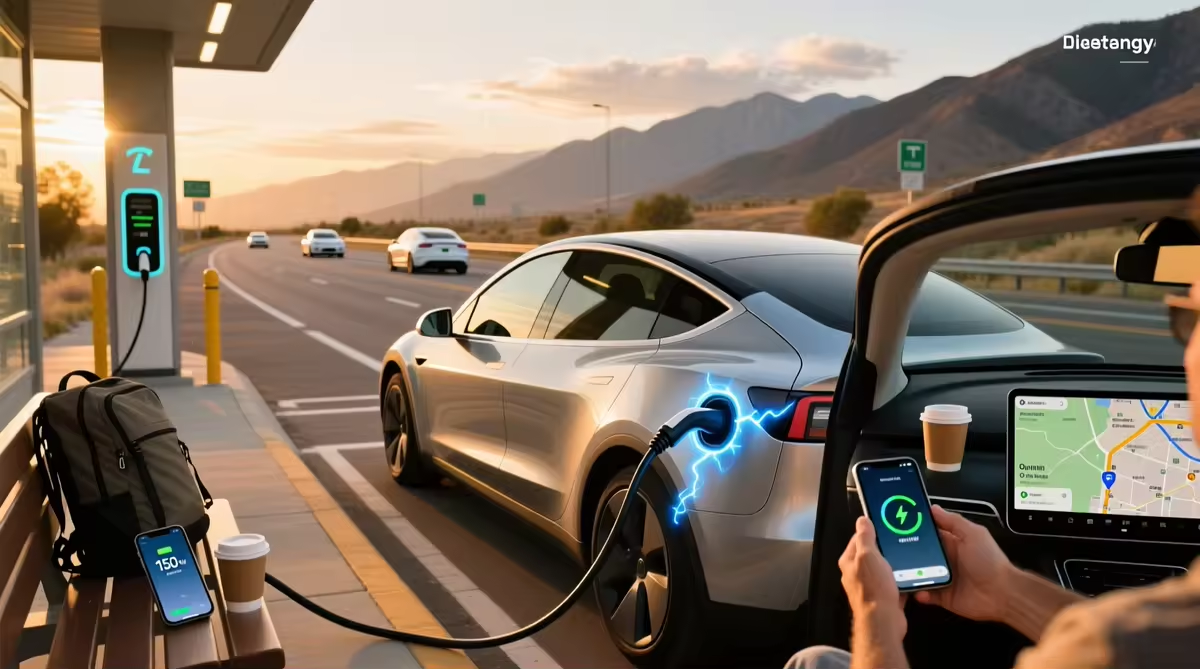
What “Ultra‑Fast” Actually Means Now
When people say ultra‑fast chargers, they usually mean DC fast chargers in the 150 kW+ range (often branded as 150–350 kW), not the slower Level 2 units you see at hotels.
Two big shifts matter for a business‑aware driver:
- Networks have moved from “more plugs” to “better uptime.” Recent data shows U.S. DC fast‑charging reliability averaging around 92–93%—a noticeable jump from the patchy experience a few years ago.
- Standardization around Tesla’s NACS connector and improved CCS hardware means less guesswork on cables, adapters, and payment flows.
The takeaway: the tech has matured enough that planning around fast chargers is starting to feel more like using ATMs than hunting for Wi‑Fi in 2007.
Step 1: Let Apps (Not Anxiety) Do the Heavy Lifting
There are a lot of EV apps; you don’t need all of them. You need a smart combo of route planning and station discovery.
- Use a planner like A Better Routeplanner or ChargeHub to map your trip around DC fast charging from the start, factoring in your car model, terrain, and weather.
- Layer in community‑driven apps like PlugShare, where you can filter for DC fast and read recent check‑ins before you commit to a stop.
A simple, effective setup for most drivers:
- Your in‑car navigation or brand app for official routing and battery pre‑conditioning.
- PlugShare or ChargePoint for cross‑checking charger type, speed, and status.
- A network app (like Electrify America or EVgo) if you know you’ll use them heavily on highways.
You’re not trying to outsmart the map—you’re just sanity‑checking what it gives you.
Step 2: Filter for Speed and Reliability, Not Just Dots on a Map
A common mistake is to look for the nearest fast charger and call it a day. On a real‑world road trip, reliability matters more than distance.
A few practical filters to use in your apps:
- DC fast / Level 3 only, and ideally 150 kW+ if your car can take it.
- Stations with multiple stalls (8+ is ideal) so you’re not stuck if one connector is down.
- Locations with recent check‑ins or session history—a good sign the site is alive and maintained.
Industry reports now talk less about “port counts” and more about metrics like verified uptime, first‑attempt success rate, and median charge speed from 20–60% state of charge. As a driver, you can approximate that by favoring big, busy sites from major networks over that one lonely fast charger behind a hotel.
Step 3: Know When to Lean on Tesla Superchargers
Love or hate the brand, Tesla Superchargers still set the bar for plug‑and‑go reliability. J.D. Power data shows only about 4% of Tesla drivers report being “unable to charge” at a Supercharger stop, compared with over 21% on non‑Tesla fast‑charging networks historically.
With more automakers adopting the NACS connector and opening up Superchargers to non‑Tesla EVs, a big part of solving range anxiety is simply: use the network that’s known to work, when you can.
If your car supports NACS (or you have the right adapter), it’s worth:
- Checking which Supercharger sites are open to your brand.
- Prioritizing larger sites near major corridors with services (food, restrooms, Wi‑Fi).
Think of it as your “premium lane” when you really can’t afford surprises between meetings or flights.
Step 4: Build in Redundancy Like a Pro
Even with improving uptime—recent indices put U.S. DC fast‑charging reliability above 93%—no network is perfect. The mindset shift that kills range anxiety is this: don’t plan around a single charger; plan around clusters.
On any leg of your trip:
- Bookmark your primary ultra‑fast site and at least one backup within 10–20 minutes.
- Aim to arrive at your planned stop with 20–30% battery, not 2–3%. That buffer turns a broken stall from a crisis into a mild detour.
This is exactly how fleets and professional drivers plan: not paranoid, just redundant.
Step 5: Treat Charging as Part of the Trip, Not a Disruption
For a digital‑first, business‑aware driver, the sweet spot is designing stops you’d want to take anyway. Many ultra‑fast charging stations are now co‑located with coffee chains, co‑working‑style lounges, and reliable Wi‑Fi.
Use 15–25 minute top‑ups to:
- Clear your inbox, review a deck, or make two focused calls.
- Stretch, hydrate, and reset—your future self will thank you more than if you’d white‑knuckled another 150 km.
When your charging plan is built around reliable DC fast charging and intentional breaks, the road trip stops feeling like battery management—and starts feeling like a smoother, slightly more structured version of what you were already doing.
Latest Posts