
Retinol for Beginners How to Start Without Irritating Your Skin

The gap between those two stories is almost always the same thing: the way it was introduced. Skin forgives a slow start far more than a rushed one.
So What Is It Doing to Your Face?
Retinol belongs to the vitamin A family, and its main talent is nudging your skin cells to turn over and renew themselves at a healthier pace. Picture a conveyor belt that has slowed down, with tired cells piling up on the surface. Retinol gives that belt a push. The payoff can include smoother texture, clearer pores, more even colour and softer-looking fine lines. None of it happens overnight, because your skin works on its own schedule, and that schedule is measured in weeks and months.
Why Beginners Get Burned
The usual mistake is enthusiasm. People buy a strong product, apply it every night, add a few other actives on top, and expect a transformation by Friday. Your skin's protective barrier, which keeps moisture in and irritation out, can't keep up with that pace. The result is tightness, stinging, flaking and a face that reacts to nearly everything, including water. A little dryness in the first few weeks is normal. Burning, swelling or raw patches are your skin waving a red flag, and they mean you did too much, too soon.
Picking a Gentle Starting Point
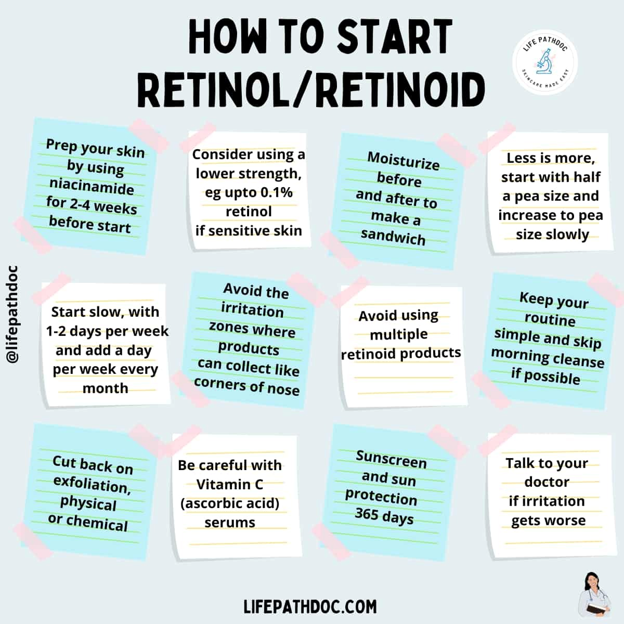
Go low on strength for your first tube. Many beginner products sit at the lower end of the range, and plenty of brands label their mildest option clearly. Creams and lotions are usually kinder than gels or watery serums, especially if your skin runs dry. Formulas that include calming ingredients such as ceramides or niacinamide can take the edge off. Resist anything advertised as maximum strength, however tempting the before-and-after photos look. You can always climb the ladder later, but a damaged barrier takes a long time to repair.
A Slow Schedule That Works
Treat your first month like a trial run. Use retinol just two evenings a week, with a couple of rest days in between so your skin gets time to recover. If it feels comfortable after two or three weeks, add a third evening. Increase only when your skin seems calm, and hold steady if it doesn't. Plenty of people find a few nights a week is their sweet spot and never need daily use. Faster isn't better here, and steady usually wins.
How to Apply It Properly
Evenings are best, because sunlight can weaken retinol and your skin is more sun-sensitive while using it. Cleanse with something mild, then let your face dry fully, since damp skin absorbs more product and tends to sting. A pea-sized amount covers your entire face, which surprises most beginners. Dot it across your forehead, cheeks and chin, then smooth it out while staying clear of your eyelids, the corners of your nose and your lips. Finish with a simple moisturiser a few minutes later. Keeping the routine short leaves less room for things to go wrong.
Cushioning Your Skin

If your skin is easily upset, try buffering the retinol. Smooth on a thin layer of plain moisturiser first, apply your retinol, then top it with a little more moisturiser. This softens the intensity while still letting the ingredient do its job. People with dry or reactive skin often swear by it. Once your skin gets comfortable, you can skip the first layer. It's a bit like wearing a helmet while you learn to ride.
Your Morning Job: Sunscreen
Retinol does its work at night, but your morning habits decide whether you keep the gains. Skin using retinol can be more vulnerable to sun damage, and a sunny day can undo weeks of effort. Apply a broad-spectrum sunscreen every morning, even when it's cloudy and even if you're mostly indoors. Reapply if you're out in the open for long. If sunscreen isn't something you'll commit to, hold off on retinol until you are. This one step protects your results more than any serum can.
Keep the Rest of Your Routine Dull
Beginners often panic and start adding products to fix the irritation, which only makes it worse. For the first few weeks, stick to a gentle cleanser, a plain moisturiser and sunscreen. Avoid scrubs, strong exfoliating acids and other potent treatments on the same night as retinol. If you love your other actives, use them on different evenings, and only once your skin has settled. Be careful with waxing and harsh hair removal on treated areas too. A quiet routine makes it easy to spot what your skin likes and dislikes.
When to Check With a Professional
Some people should get advice before starting. If you're pregnant, trying to conceive or breastfeeding, talk to your doctor first, since vitamin A products are generally avoided during those times. The same goes for anyone with eczema, rosacea or another skin condition, or who uses prescription treatments for acne. A quick patch test on a small area for a couple of days is also a sensible habit. And if your skin ever swells, blisters or hurts badly, stop and see a doctor.
If You Overdo It
It happens to almost everyone once. Pause the retinol for several days, and go back to a gentle cleanser, a soothing moisturiser and sunscreen until your skin feels normal. Then restart at a lower frequency, perhaps one night a week, and build up more slowly than before. Don't try to push through discomfort in the name of results. Good skincare shouldn't feel like punishment. Your skin communicates clearly if you're willing to listen.
Final Thoughts
Retinol rewards people who treat it gently. Start low, go slow, wear sunscreen, and keep everything else simple. Give it a few months before judging, because the real changes tend to arrive quietly. If something feels off, step back instead of giving up for good. A dermatologist can help you choose the right product if your skin needs a more tailored plan.
Frequently Asked Questions
1. When should I start using retinol?
There's no set age. Many people begin in their late twenties or thirties, depending on their concerns. A dermatologist can help you decide the right time.
2. How long before I see results?
Texture may feel smoother in a few weeks, while changes in fine lines or tone often take around three months or more. Consistency matters more than strength.
3. Can I use retinol every night?
Some people can eventually, but beginners should start with two nights a week and increase slowly. Many do well with a few nights weekly.
4. Can I combine retinol with vitamin C?
Yes, many people use vitamin C in the morning and retinol at night. Introduce them one at a time so you can spot any irritation.
5. Is retinol safe in pregnancy?
Vitamin A products are generally avoided during pregnancy and while trying to conceive. Check with your doctor about safer options.
Latest Posts