
Short-Term Treasury ETFs vs. Ultra-Short Bond Funds Comparing interest rate protection, monthly yield payouts, and capital preservation for conservative investors.
Quick Answer
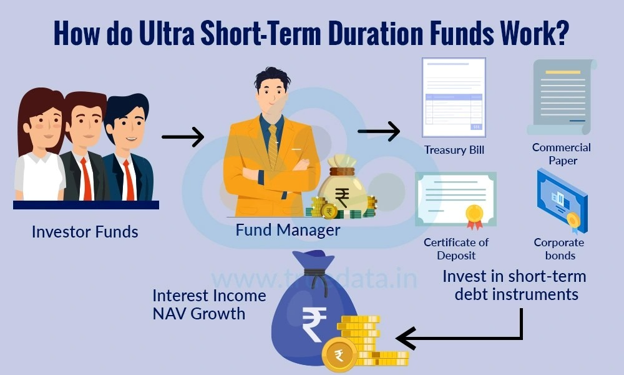
Ultra-short bond funds like JPST add a bit of corporate and investment-grade debt into the mix, usually picking up a modestly higher yield in exchange for slightly more risk. Neither is "better" across the board — it comes down to how much you value pure safety versus a bit of extra income.
Why Conservative Investors Are Suddenly Paying Attention to This Corner of the Market
For a long stretch of low interest rates, this whole category was almost an afterthought — parking cash in a money market fund or a short-duration bond paid you next to nothing, so why bother comparing the options closely? That's changed. With yields on these funds sitting comfortably above 3.5%, and in some cases north of 4%, short-term fixed income has become a genuinely attractive place to sit rather than just a waiting room before deploying money elsewhere.
That shift explains why comparisons like this one matter more now than they did a few years ago. When the difference between "safest possible option" and "slightly higher-yielding option" is worth real money, it's worth understanding exactly what you're trading off.
What Short-Term Treasury ETFs Actually Hold
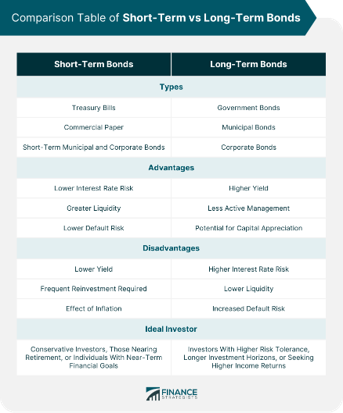
These funds are about as straightforward as fixed income gets. Something like the iShares 0-3 Month Treasury Bond ETF (SGOV) holds Treasury bills maturing in three months or less, backed directly by the U.S. government. The SPDR Bloomberg 1-3 Month T-Bill ETF (BIL) follows a similar approach. Because these funds hold debt issued by the federal government with such short maturities, credit risk is about as close to negligible as you'll find in any investment product, and interest rate sensitivity is minimal since the underlying bills roll over so quickly.
Yields on these funds currently sit in the high-3% range, broadly tracking short-term Treasury rates. There's also a quieter tax benefit worth knowing about: interest from Treasury holdings is exempt from state and local taxes, which matters more the higher your state tax bracket happens to be.
What Ultra-Short Bond Funds Actually Hold
Ultra-short bond funds, like the JPMorgan Ultra-Short Income ETF (JPST), take a step further out on the risk spectrum. Instead of sticking purely to government debt, these funds mix in high-quality corporate bonds, commercial paper, and other investment-grade fixed and floating-rate debt, typically with slightly longer maturities than pure Treasury bill funds.
That mix is exactly why these funds tend to yield more — JPST has recently yielded somewhere in the 4.2%-4.3% range, meaningfully above SGOV's roughly 3.8%-3.85%. The tradeoff is real, even if it's modest: you're taking on some corporate credit risk and slightly more duration exposure in exchange for that extra yield. In a genuinely severe credit event, ultra-short bond funds would likely feel it more than a pure Treasury bill fund would.
Interest Rate Protection: Both Categories Do Well, But Not Identically
Here's the good news for anyone drawn to this category specifically for rate protection: both fund types are built to minimize interest rate sensitivity, since duration risk grows with how long a bond takes to mature. Treasury bill ETFs, holding debt that matures in a matter of weeks or months, are about as insulated from rate swings as a fixed-income fund can be.
Ultra-short bond funds carry slightly more duration on average, since their holdings can stretch a bit further out than a pure T-bill fund's. That's a small difference in practice, but it's not zero — if rates move sharply, an ultra-short fund will likely show a touch more price movement than something like SGOV or BIL.
Monthly Yield Payouts: Similar Mechanics, Different Amounts
Both categories typically distribute income monthly, which is part of what makes them appealing for investors who want a predictable income stream rather than waiting on quarterly or semiannual payouts. The mechanics are similar across both fund types — what differs is the amount, driven by the underlying holdings' credit quality and maturity profile.
Treasury-focused funds pay out based on Treasury bill yields, while ultra-short bond funds blend in the higher yields available from investment-grade corporate debt. That's the practical tradeoff distilled into a single number on your statement each month: slightly more income from ultra-short funds, slightly more certainty from Treasury-only funds.
Capital Preservation: Where the Real Distinction Lives
If capital preservation is genuinely your top priority — meaning you care more about not losing money than about squeezing out extra yield — pure short-term Treasury ETFs have the cleaner case. Government-backed debt held for a matter of weeks carries about as little principal risk as exists in the investable universe.
Ultra-short bond funds are still considered conservative, low-volatility holdings by any reasonable standard, and they've historically held up well even during periods of market stress. But "still very safe" isn't quite the same claim as "essentially risk-free," and that distinction is where these two categories genuinely part ways for the most risk-averse investors.
Which One Fits Your Situation?
If you're parking an emergency fund, saving for a near-term goal, or you simply can't tolerate any meaningful principal risk, a short-term Treasury ETF is the more conservative, more defensible choice — and the state tax exemption is a real, if modest, bonus depending on where you live. If you're comfortable with a small amount of additional credit risk in exchange for extra yield, and you're using this money as a slightly longer-term cash alternative rather than an untouchable emergency fund, an ultra-short bond fund is a reasonable way to pick up incremental income.
Plenty of conservative investors split the difference, holding both — Treasury ETFs for the portion of cash they genuinely cannot afford to see decline, and ultra-short bond funds for the portion where a bit more yield is worth a small amount of added risk.
Latest Posts