
Sleep Architecture The New Fitness Metric Everyone's Obsessing Over
The catch worth knowing upfront: consumer trackers are genuinely useful for spotting trends over time, but they're still meaningfully less accurate than a clinical sleep study, so the number on your app shouldn't be read as gospel.
Why This Suddenly Became a Thing
For years, sleep tracking meant one number: total hours. You'd wake up, glance at your watch, and see something like "7h 12m," and that was basically the whole conversation. That's changed fast. Modern trackers — rings, watches, even under-mattress sensors — now break the night down into light, deep, and REM stages, layer in heart rate variability and skin temperature, and spit out a "sleep score" that feels a lot more like a fitness metric than a passive log.
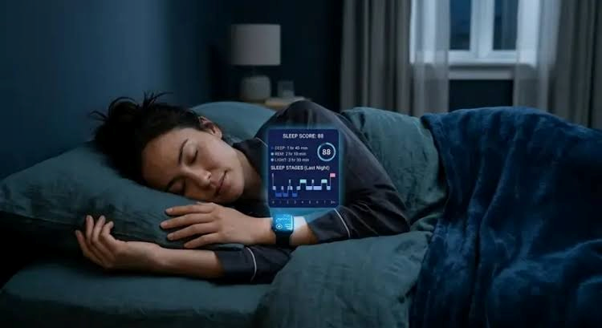
That shift lines up with a broader mindset change. People who've spent years optimizing workouts, tracking macros, and chasing recovery scores have started applying that same lens to sleep. It makes sense — if you're already treating your body like a system to be tuned, "how well did I actually sleep" is a natural next question, and sleep architecture finally gives that question a number to chase.
What Sleep Architecture Actually Means
A full night of sleep isn't one continuous state — it's a series of cycles, typically four to six of them, each moving through distinct stages. Light sleep dominates the early part of a cycle, deep sleep (also called slow-wave sleep) tends to cluster in the first half of the night, and REM sleep — where most dreaming happens — gets progressively longer in the cycles closer to morning. Deep sleep is generally associated with physical recovery and immune function, while REM sleep gets more credit for memory consolidation and cognitive processing.
Typical stage percentages, according to sleep researchers, run roughly like this across a full night: light sleep makes up the majority at somewhere around 50-60%, deep sleep sits in a smaller band, and REM fills out a meaningful chunk as well. The exact healthy ranges vary by source and by individual, which is part of why so many people staring at their own sleep app data end up more confused than reassured.
Why Fitness Enthusiasts Are Latching Onto This Specifically
For anyone training seriously, sleep has always mattered, but it used to be treated as background hygiene rather than an active variable to manage. Sleep architecture data changes that framing, because it lets you connect specific nights to specific outcomes. Trained hard and slept poorly? You can now actually see whether deep sleep dropped that night, rather than just guessing based on how sore you feel.
That kind of feedback loop is exactly what makes fitness-minded people obsessive by nature — it's the same instinct that drove the heart-rate-zone craze and the recovery-score trend before it. Sleep architecture gives training decisions a new input: instead of just adjusting a workout plan based on how tired you feel, some athletes are now adjusting based on whether last night's deep sleep percentage came in low, treating a bad sleep-stage night the way they'd treat a missed macro target.
The Accuracy Problem Nobody Talks About Enough
Here's the part that gets glossed over in a lot of wellness marketing: consumer sleep trackers are decent at estimating total sleep time and overall sleep efficiency, but they're considerably less reliable at pinpointing exact sleep stages. Research comparing wearable output against clinical polysomnography — the gold-standard sleep study done in a lab — has found real gaps, particularly in distinguishing deep sleep from light sleep with precision. Some estimates put wearable accuracy for sleep staging specifically at around 70-80% compared to lab equipment, and that accuracy tends to vary depending on which part of the night you're looking at.
That doesn't make the data useless. It makes it directionally useful rather than clinically precise. A tracker that consistently shows your deep sleep dropping after late-night workouts, alcohol, or high-stress days is telling you something real about a pattern, even if the exact percentage isn't lab-grade. Treating a single night's stage breakdown as a diagnosis, on the other hand, is where people tend to get into trouble — especially anyone prone to health anxiety, who can end up more stressed about their sleep score than they ever were about sleep itself.
How to Actually Use This Data Without Overthinking It
The most useful approach is to treat sleep architecture the way you'd treat any fitness trend line: look for patterns across weeks, not verdicts from single nights. If deep sleep consistently drops on days you train late, drink alcohol, or go to bed inconsistently, that's genuinely actionable information. If one night looks a little off compared to another, that's just normal night-to-night variation and not something to spiral over.
It's also worth remembering what actually moves these numbers in a meaningful way: consistent sleep and wake times, limiting alcohol and heavy meals close to bedtime, keeping your room cool and dark, and managing stress before bed. None of that is new advice — sleep architecture tracking hasn't invented a new set of interventions, it's just given people a more granular way to see whether the basics are actually working.
Latest Posts