
Surviving the Automation Shock How to Future-Proof Your Income Against AI Shifts

The "automation shock" isn't just a media buzz word; it's the huge change to how people work that has started now; according to Goldman Sachs, AI will create an estimated 25% of all working time globally by 2026.
What Automation Shock Really Means for Your Wallet
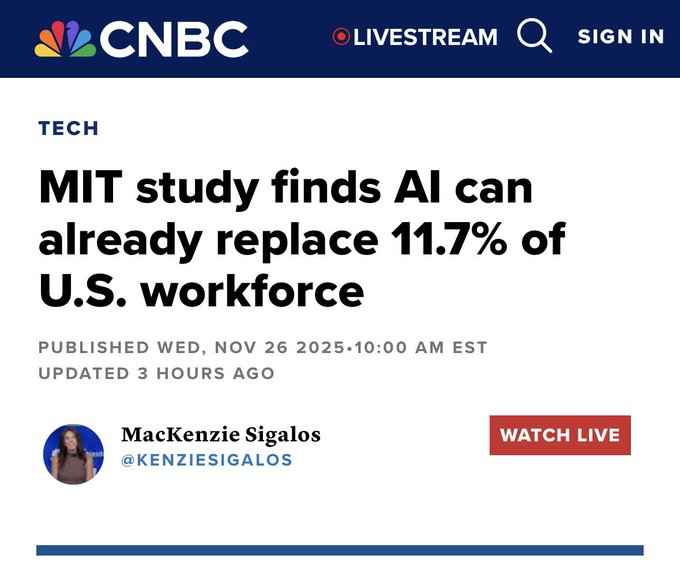
AI can do serious damage. It's going straight for repetitive work and taking jobs. Goldman Sachs estimates about 25% of all job hours in the U.S. will be replaced by automation. This could mean a short-term loss of 6 to 7% of the current number of jobs, but will result in a 15% increase in productivity. A study from MIT finds that 11.7% of jobs in theU.S. are automatable today, and many companies have already cut back on entry level jobs.
In terms of the business perspective, this means you need to rethink your source of income as a business owner. Manufacturing will have up to 30% of jobs replaced by automation, and office jobs will see data entry and basic reporting disappear. While there will be many job losses, there will also be many new jobs created by AI. For every job you lose, another will be created because of AI. Over 78 million new knowledge jobs will also be created, with 56% of those being higher paying for collaborative workers. The biggest impact will come from not having a plan in place to adjust to this change.
Jobs AI Struggles to Touch
Roles are robustly determined; construction roles and hands-on trades make for safe options with 0% risk across 50 categories. These jobs rely on physical perception which cannot yet be performed by machines; therefore, they are extremely safe. Health workers and maintenance employees also create safe environments, as they utilize empathy and their judgement at specific sites.
Companies maintain their strategy regardless of employment type - and therefore employ AI-based finance analysts who receive a base salary that is 33% higher in comparison to finance analysts that interact with AI-generated data; AI generates outputs that cannot be contextually recognized solely by humans. To summarize: AI enhances routine, while humans own ambiguities, relationships, and synthesis.
Skills That Pay Dividends in the AI Era
Emphasize what machines are least capable of mimicking. While complex problem solving involves searching new puzzles with AI looking for patterns the same way as AI, creative synthesis connects dots in a creative way which leads to breakthroughs like creating new markets.
Technical communication solidifies this—how you translate the insights from AI for those external to your organization helps generate consensus around the algorithms you create. In addition, Northeastern states that introducing AI allows you to concentrate on high-value strategy, creativity, and leadership. Where you can sharpen up: innovative edges in AI, systems design and ethical accountability will yield value to your organization as they pursue AI alignment.
Practical Steps to Future-Proof Your Income
Utilize tools like ChatGPT for mapping tasks and providing route automation to free up capacity for oversight. Create personalized learning paths to reskill by utilizing AI-enabled platforms to check gaps in knowledge and provide training aligned with your company’s strategy.
Diversification of revenue streams will become a necessity. The use of freelance workers as AI/human hybrids on platforms such as Upwork will begin to drive value; analysts who can merge data and narrative will receive top dollar. Numerous side income generating products are possible, including consulting in AI ethics or training internal teams so we can provide portfolios of AI solution threats. Northeastern is pushing for mastery of AI across all industries to ensure continued long-term growth in open market value.
For an organization, investing in reskilling employees creates a proactive way to mitigate inequality-based shocks by providing training, benefits and flexible schedules. Resetting corporate and employee productivity metrics, reviewing employee role transitions as a benchmark. A marketer used AI to pivot into an organizational strategy role with a 25% pay increase.
Emerging Opportunities You Can Seize Today
The emergence of AI-based roles is bringing together the worlds of technology and humans to create new employment opportunities such as deployment ethicists and augmentation strategists. There is significant interest and investment from venture capitalists in AI-related roles and businesses that are expected to grow significantly by 2026, but those adapting to this change are thriving—think Business Intelligence Directors who have (or are acquiring) mastery of AI tools (e.g., $140,000 - $220,000 per year).
With policies in a lagging state, you will need to develop self-directed leadership skills and continuously develop and hone your judging ability (in any field) to stay current with emerging technologies (e.g., edge computing skills). The World Economic Forum (WEF) has released a report on four potential economic scenarios for 2030 and is predicting that the most value-added jobs will involve talent flexibility.
This technology will come as a shock to many, and while many people will be confused during this transition, you can see it as an opportunity to continue evolving yourself as an individual and/or a leader.
Build Your Future Using AI
Prepare appropriately, and AI will be a tool for you to leverage your competitiveness in the marketplace, not a reason to execute yourself from the marketplace. You can begin your journey of preparing yourself to leverage the power of AI to obtain competitive advantage in the job market by developing and creating a plan to map where you want your career to go in the future (i.e., tomorrow).
Latest Posts