
Why almost every company is becoming a fintech company
While it all started with Shopify offering merchant loans, the growth of these types of solutions has been exponential; we now have Uber providing drivers' instantaneous pay advances, Starbucks allowing customers to invest loyalty points, and Instacart providing grocery delivery loan underwriting during checkout. For businesses built on digital platforms, this is no longer optional – it is part of their core business.
From Feature to Revenue Engine
Embedded finance platforms allow embedded finance in any app with modular APIs, including banks. D2C brands use BNPL to reduce cart abandonment, SaaS companies use subscription billing with built-in invoice financing, which help the all platforms make an additional 1%-3% on all the volumes of transactions they are now processing through their internal systems. The economics work as they have generated an average of 200-500 basis points on the margins.
The thousands of embedded finance transactions occurring globally indicate that the model is viable. For example, in 2025, Walmart generated $2.8 Billion in revenue from lending embedded in its checkout process, and Shopify's lenders financed $17 billion in loans to Shopify merchants in 2021. Additionally, McKinsey reports that the embedded payment industry will exceed $7 trillion in total payment volume by 2030 and that lending will grow at the highest rate due to the greater number of transactions allowing for real-time underwriting.

The Flywheel: Data Drives Decisions
Embedded systems create positive feedback loops. For example, by feeding real-time transaction data into machine learning credit models that approve loans within milliseconds; Klarna makes more than 100 million decisions every day based on purchase history alone. Merchants can use long-term value through the stickiness of financing; 68% of Buy Now Pay Later users will make a repeat purchase within 90 days.
Insurers can embed parametric products into their offerings as Zopa offers travel insurance when booking a flight, and PolicyBazaar trialling health insurance when using telemedicine. The data advantage also builds on itself - traditional incumbents lose as they underwrite by way of forms, while embedded players are scoring off of behaviour.
India's Quiet Revolution
India is experiencing rapid growth. Embedded finance via PhonePe is powering merchant credit/loans through 25 million+ offline retailers; Khatabook offers credit by using invoice data to accelerate credit decisions. The new UPI 3.0 payment system provides non-bank lenders with instant access to credit bureau data without having to charge their customers fees per request and allows the aggregation of many non-bank lenders’ records into a single source at zero cost.
RBI’s 2024 Digital Lending Guidelines have validated embedded lending platforms that will require compliance as a data fiduciary to allow access to 500 million previously unbanked consumers. NBFCs can generate origination scale by partnering with embedded lending fintech while the fintech companies have total ownership of customer acquisition; this is where win-win economics square themselves.
Platform Economics: Why Everyone Builds
The three primary reasons that non-financial companies are utilizing embedded finance include:
- Retention rates for customers soar. Consumers who use Buy Now Pay Later have a 40% higher lifetime value; those who purchase embedded insurance have 25% higher renewal rates than traditional policies.
- Payment float turns into revenue for businesses. Businesses can hold up to 5 days of working capital for every transaction on their platforms - allowing for them to generate up to $10 billion per year in total gross revenue at scale.
- Data moats expand and become more difficult to penetrate. Transaction graphs can better predict churn than any CRM system; credit signals can lead to an increase in upselling.
Costs associated with building payments have changed drastically. Five years ago it would have cost $50 million to set up a new payment infrastructure, but with Issuing APIs from Stripe, companies can launch their card programs in a matter of weeks, and with Plaid connecting over 12,000 institutions instantaneously.
Finally, large incumbent banks are also avidly adopting white-label solutions from third party providers; instead of competing with banks to build their own pipes, these companies want to build differentiated customer experiences.
Regulatory Tailwinds, Competitive Headwinds
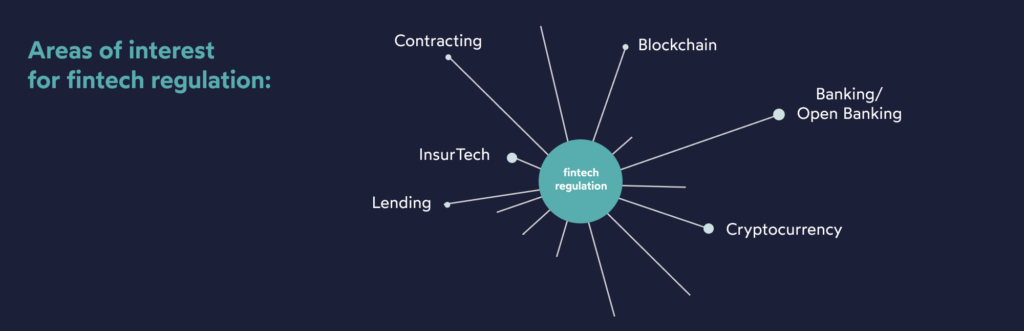
Regulatory compliance makes things easier for companies that are looking to adopt new technologies. For example, the European Union has issued a directive (PSD3) that requires banks and payment service providers in Europe to use open APIs for exchanging transaction data via Open Banking APIs. Similarly, the U.S. Consumer Finance Protection Bureau (CFPB) is implementing regulations regarding consumer data sharing under Section 1033 of Dodd Frank Act.
Additionally, Singapore has approved over 200 startups for its fintech regulatory sandbox since January 1, 2023 as part of its effort to foster innovation within the financial services industry and accelerate the adoption of technologies such as blockchain.
In response, many large financial institutions are acquiring or partnering with startups to help them gain an edge over their competition (e.g., JP Morgan buying Thunes; HSBC launching Zing), however, many of these acquisitions still lack scale; for example, why would a bank compete against Visa when Zomato has 50 million monthly active users?
The HNI Playbook: Build or Partner?
Forward companies can choose between three different ways of moving forward:
- Develop their own technology stack by building a customized solution using Stripe Treasury and Unit Banking APIs (most likely to achieve $1M+ GMV brand)
- Partner with either Galileo or Synctera to license their banking technologies and rebrand them as a mid-market firm
- Have resellers wrap their implementation of Shopify / Shopify Plus around your channels for an agency
In India, High Net Worth Individuals (HNIs) have discovered that investments in financial technology (fintech) that are able to capture the growing marketplace of $2 Trillion per year in digital transactions represent significant dollars (approximately $20 B) that will flow into the platform building side of things (rather than building pure infrastructure capabilities). In the long run, HNIs are willing to be patient with capital investments in fintech where the platform owns the merchant relationships rather than those that simply provide pure infrastructure.
Beyond Payments: The Full Stack Future
Financial systems will keep evolving. Wealthfront built automated investment features directly into the HR platforms of employers, while Acorns offers to fractionalise employee payrolls/salaries for investment purposes. Insurtechs harnessed parametric agricultural insurance products in agricultural apps while health plans will become active when their members trigger them via their wearables.

The entire customer experience through digital channels can be converted into a stream of new, monetisable revenue streams. The merchant(s) that operate the checkout ingest/own capital (funds), while the traditional bank acts as a “pipe” and platform acts as the “balance sheet.” Your biggest competition is no longer Fintech (financial technology), but rather anyone else in the interaction layer with you (the merchant).
Latest Posts